Prologue
A travelogue of Atami, Japan + Fireworks Festival in late April
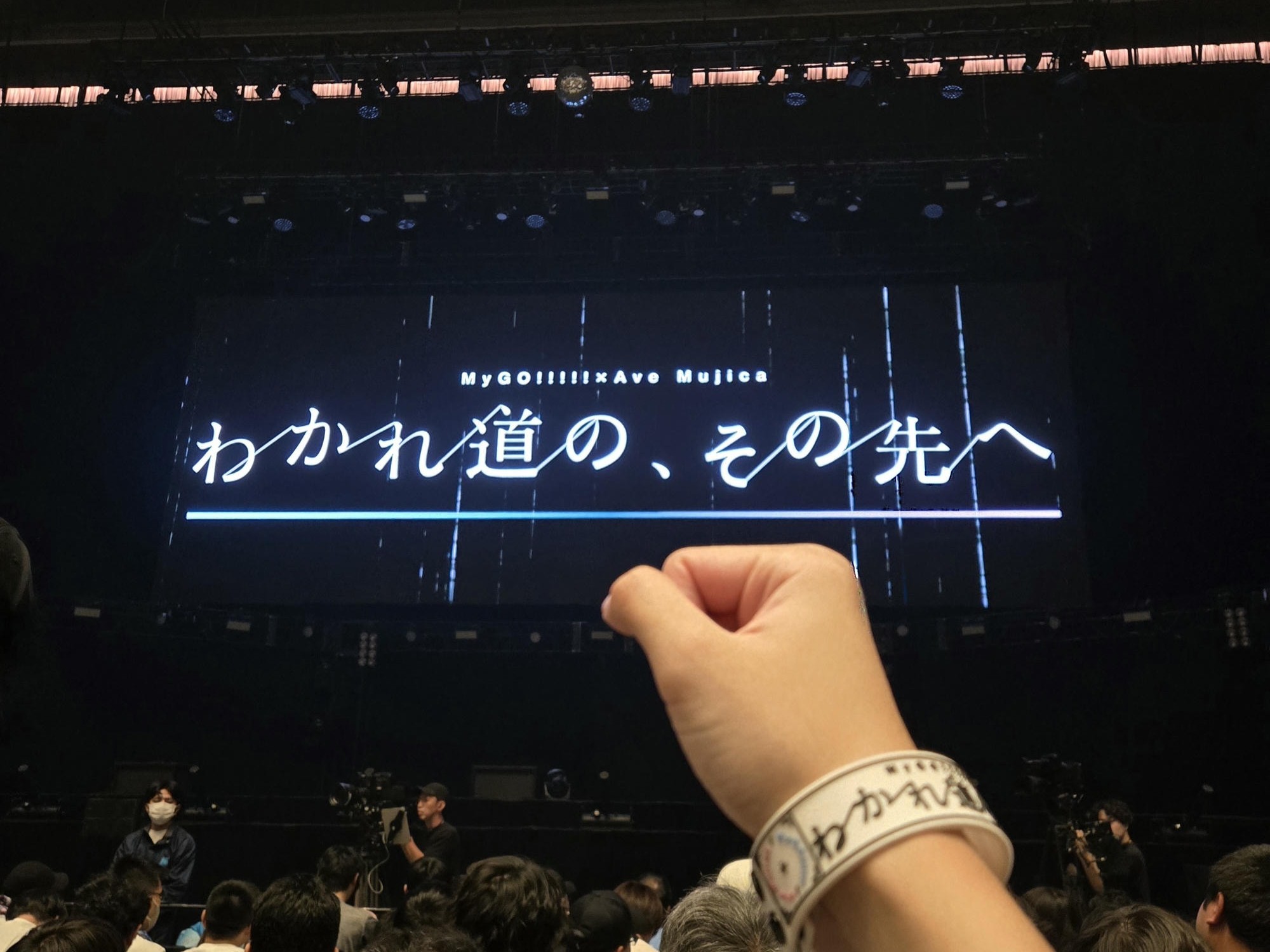
This trip picks up the day after the joint live concert. For the previous part, please see[Travelogue] MyGO!!!!! × Ave Mujica Joint Live "Beyond the Crossroads" - My First Overseas Live Concert
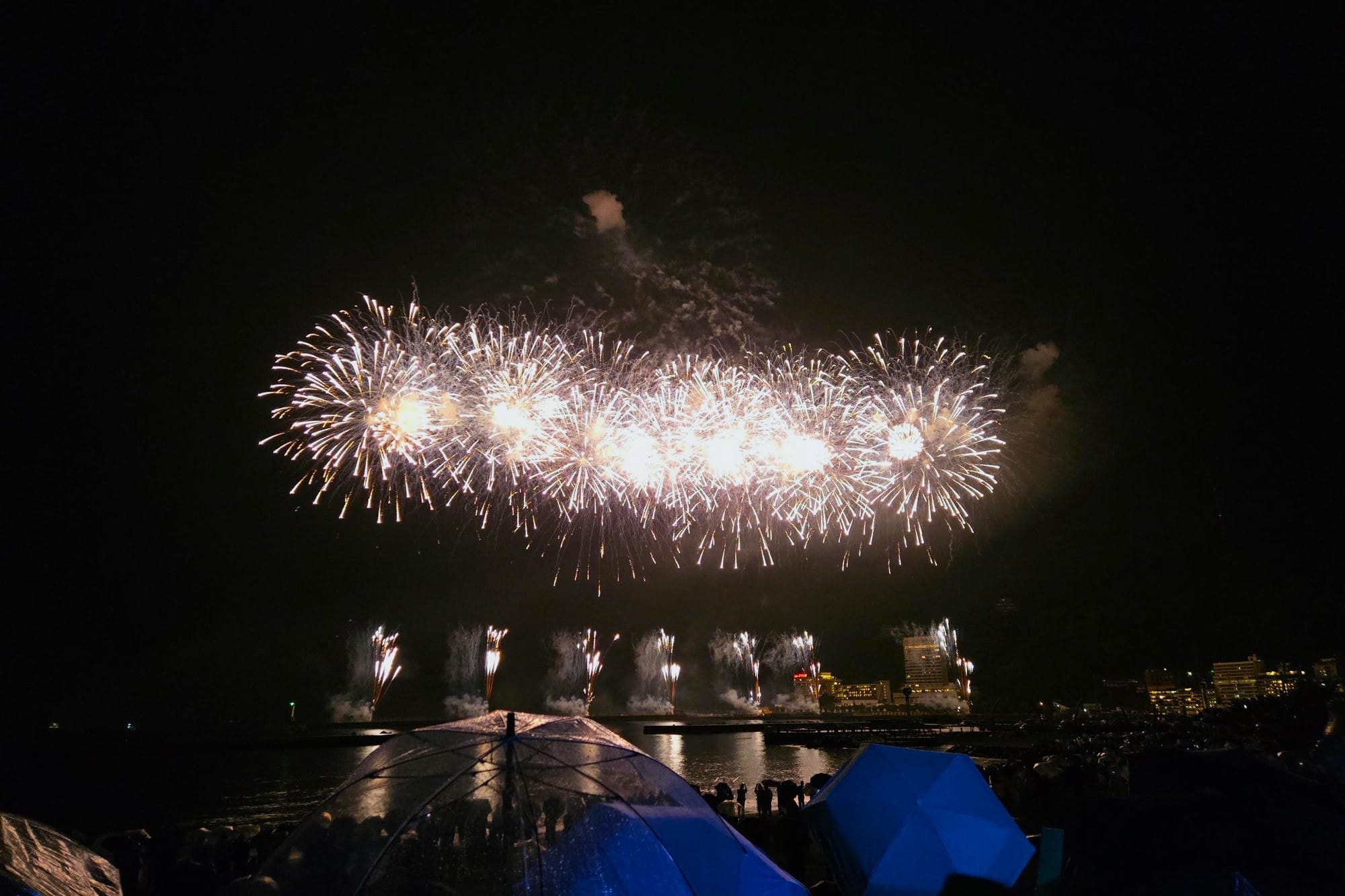
Having visited most of the nearby areas, I never thought I'd actually achieve the jokingly-set goal of watching a fireworks festival in Japan.
But it just so happened that Atami had one on the Monday after the joint live, and Atami isn't far from Yokohama.
So, I decided to arrange a one-day flash trip, returning to Yokohama to stay for the night.
I think one day is enough for Atami; you could consider staying one night, two at most. While there's public transport, driving offers more freedom and convenience.
It's not hard to get to either; about an hour or so down the JR line from Yokohama, or faster by Shinkansen.
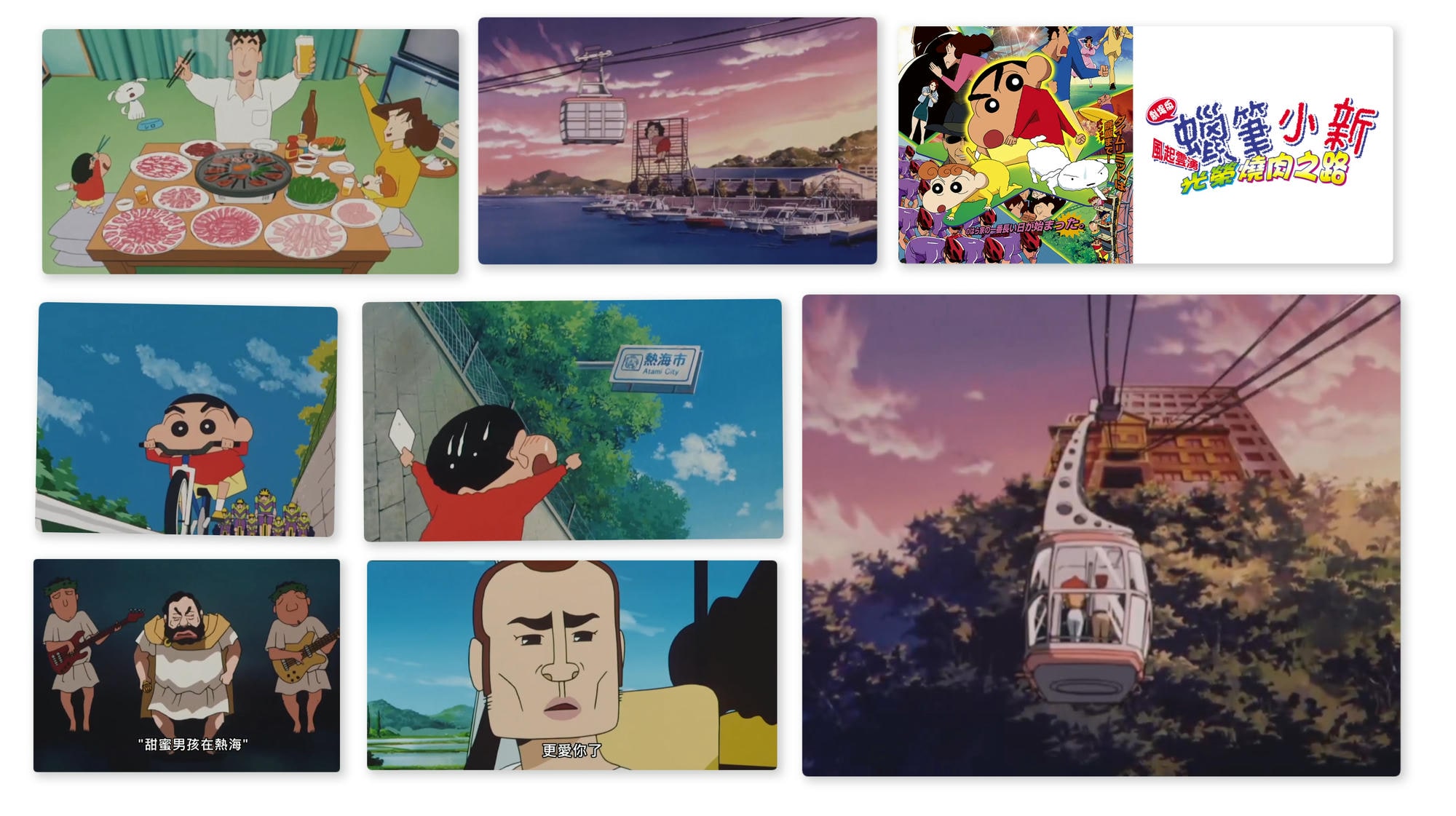
For me, Atami is most memorable for some scenes from蠟筆小新 - 光榮燒肉之路 (Crayon Shin-chan: The Glorious Road to Yakiniku) that I watched as a child.
This movie is actually one of my favorite Crayon Shin-chan films, with its high laugh-out-loud factor 🤣
It also gave birth to many famous scenes, "Oh, I love you even more~"
It's an absolute classic from that era, and I'd even say my impression of Japanese yakiniku started with this anime.
Getting back to the main topic, Atami is also known as a summer retreat for Japanese people, and, most importantly, for its fireworks festival.
How to describe a fireworks festival? It's been part of my impression of Japanese culture since childhood, with festivals combined with fireworks, etc. After watching a video of the Tonegawa Fireworks Festival shared by Lengshui, I've always yearned to experience one.
As for the actual experience... I can only say it was a bit of a shame that it rained that evening, making things a bit messy and less enjoyable. I'm not sure if it was due to the rain or if Atami's festivals are just like that, but there wasn't much festival atmosphere or music, which was a little disappointing.
Anyway, it's rare to see a fireworks festival in Japan, and I also got to visit Atami, a city with a distinctly different vibe from Tokyo.
Now, let's briefly recall the trip.
Heading to Atami
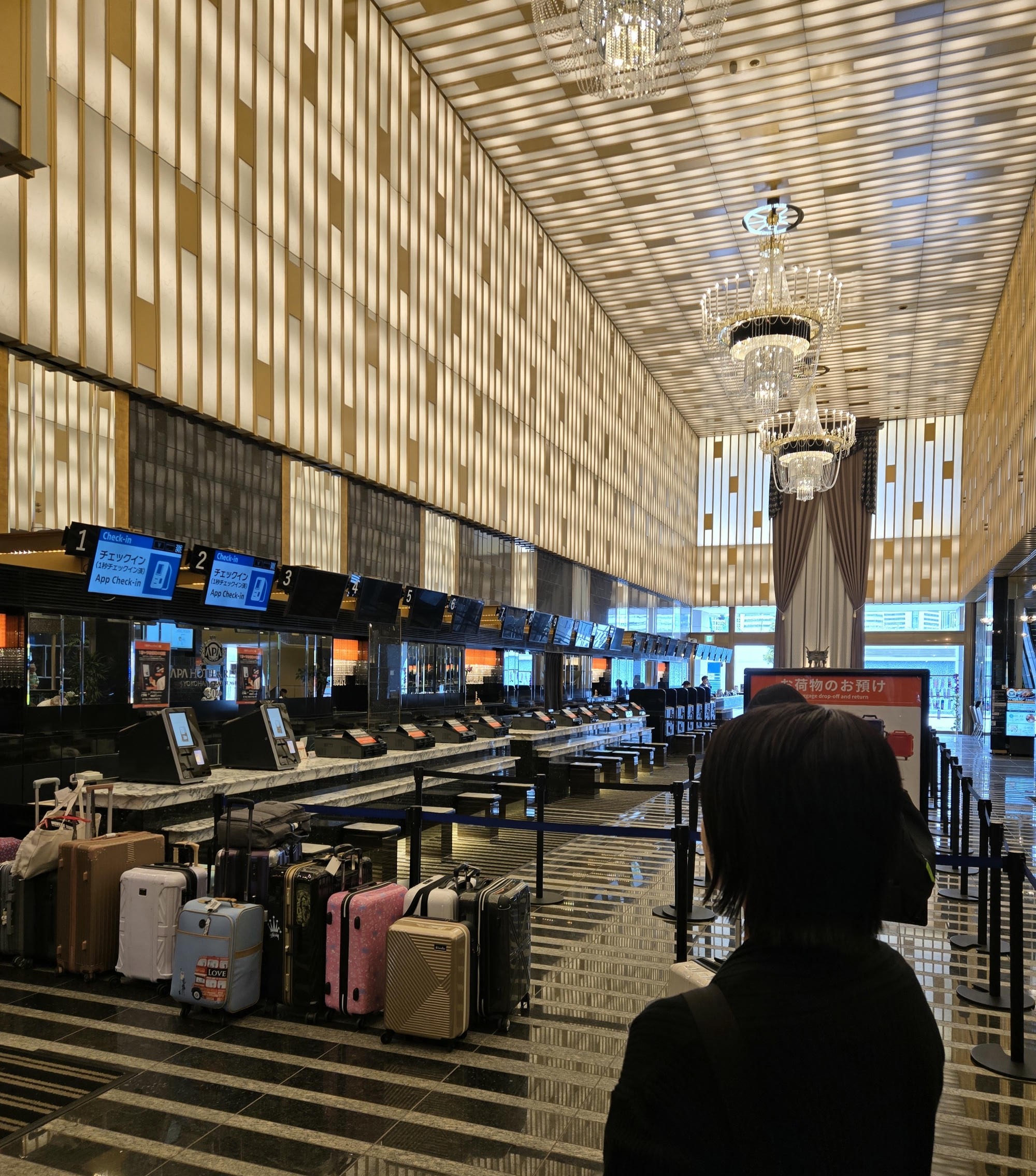
First thing in the morning, I checked out from the Yokohama JAL hotel where I had been staying and headed to the APA Hotel & Resort Yokohama Bay Tower, where I'd be staying tonight, to drop off my luggage.
My friend highly recommended this place. After staying there that night, it truly stood out from typical APA hotels; the entire building was fully functional,
almost like a hotel combined with a small shopping mall.
After checking in, I briefly parted ways with my friend. He was going to see the "Rascal Does Not Dream of Bunny Girl Senpai" exhibition and would meet me in Atami later, while I headed to Atami early.
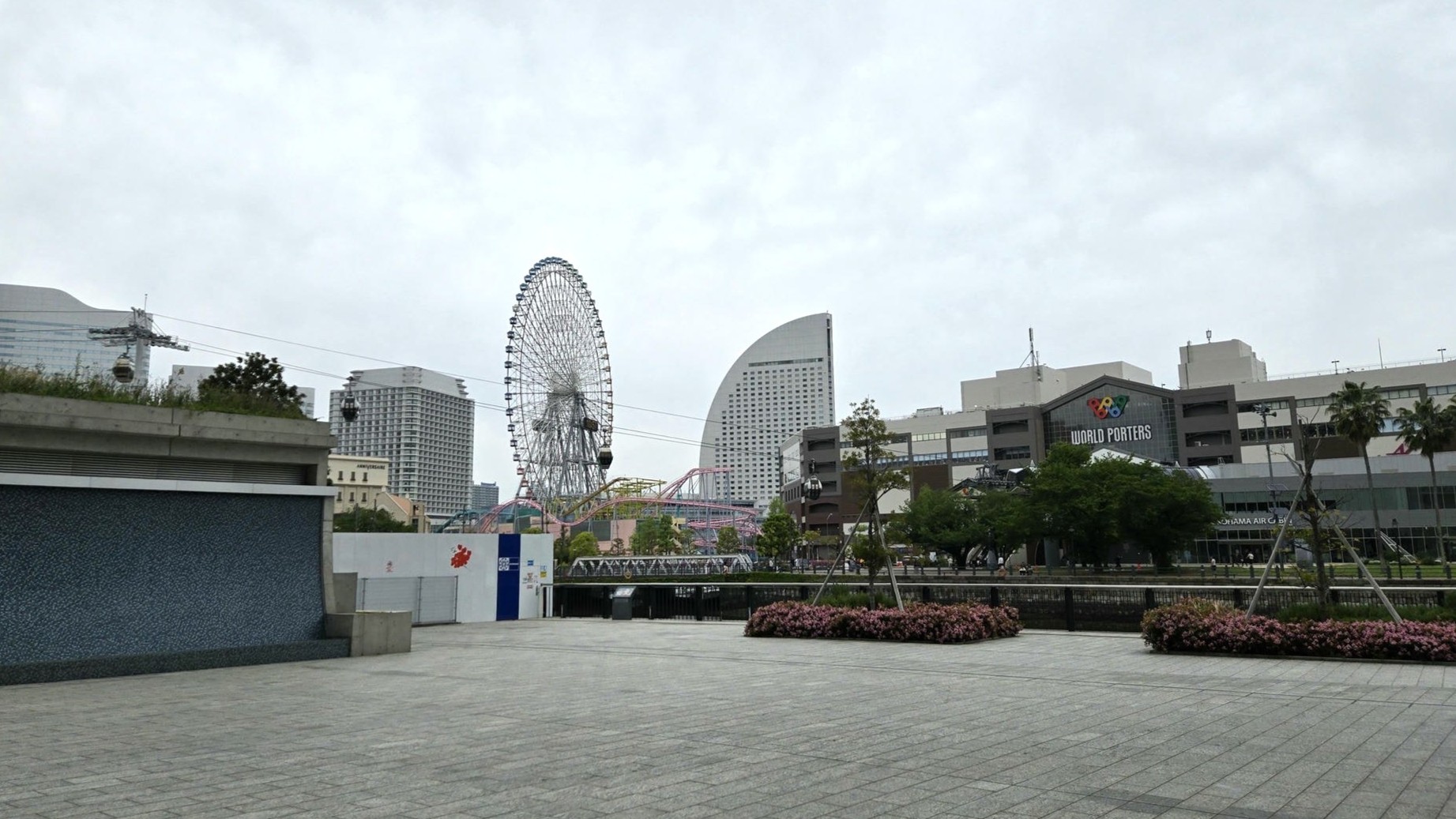
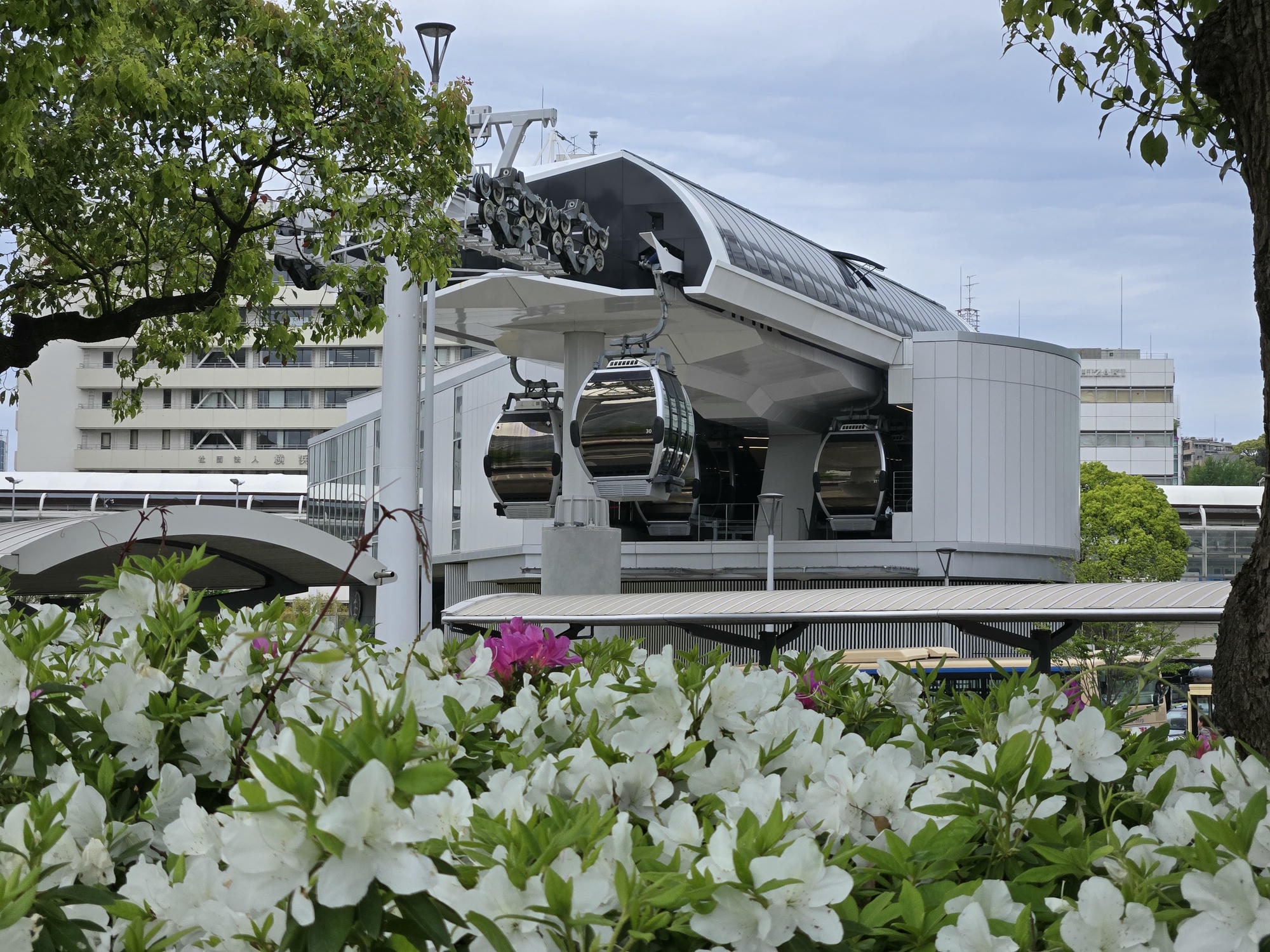
Yokohama in the Morning
The day was a bit hazy.
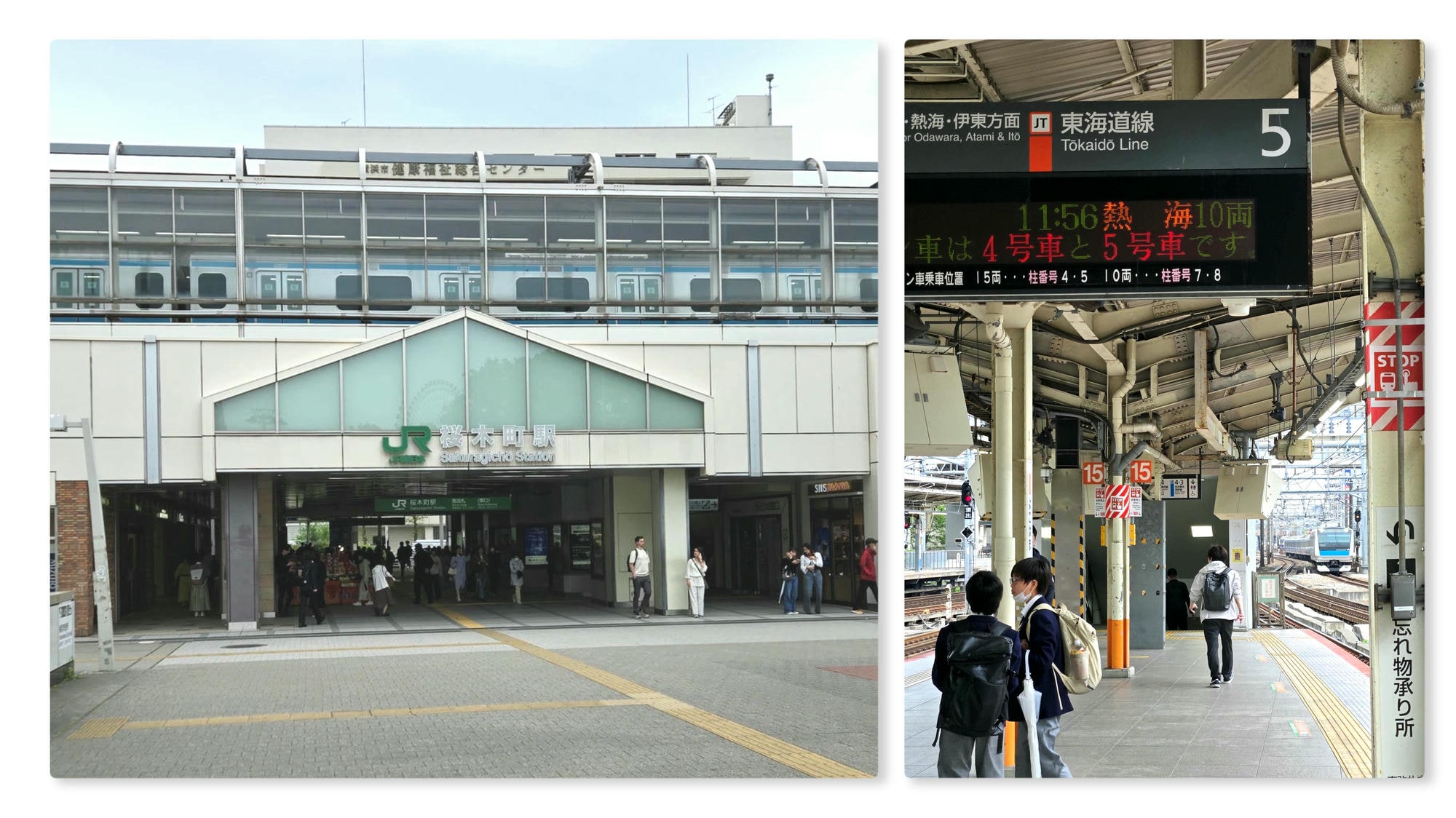
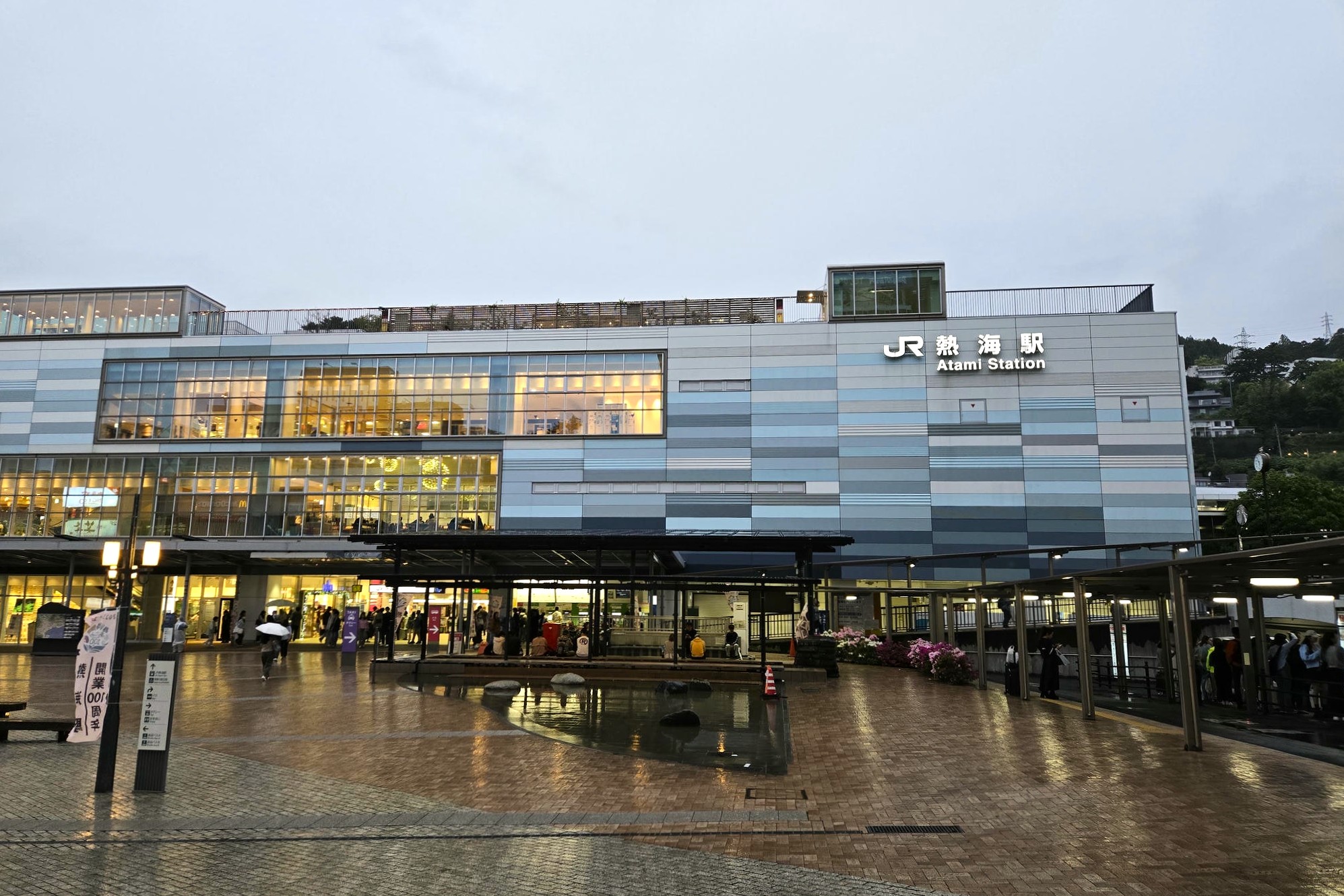
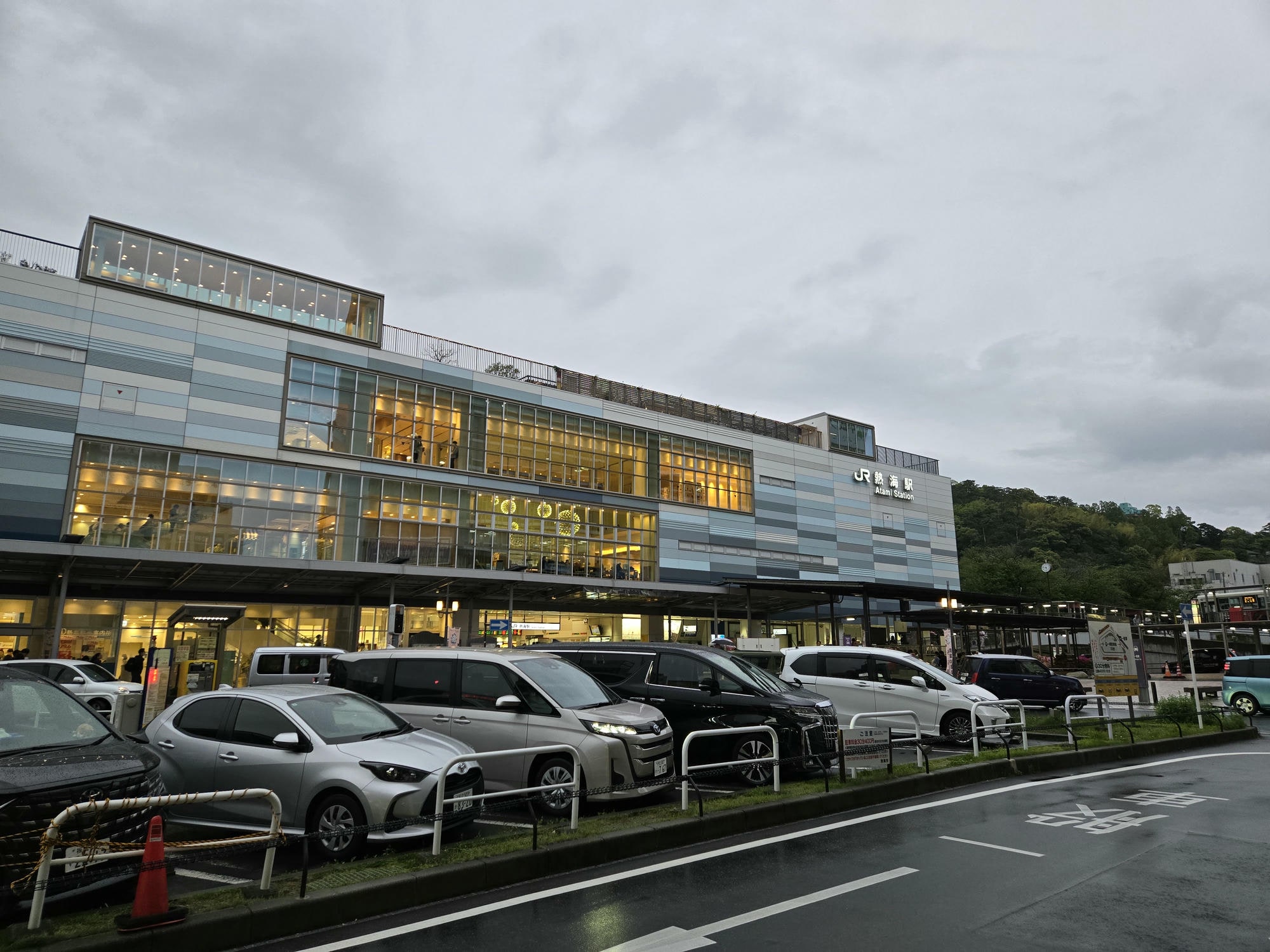
Atami Station
I arrived in Atami in about an hour.
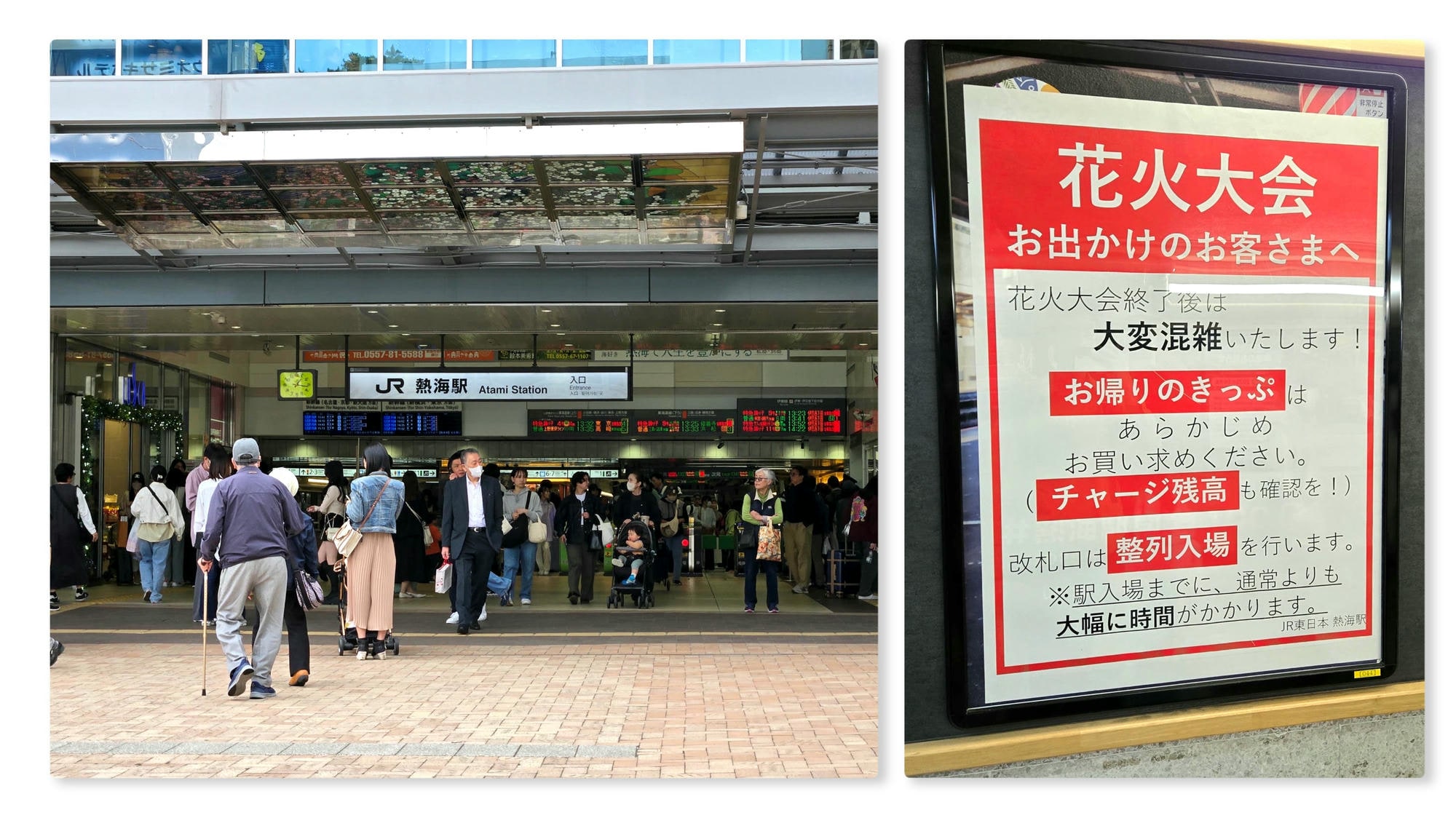
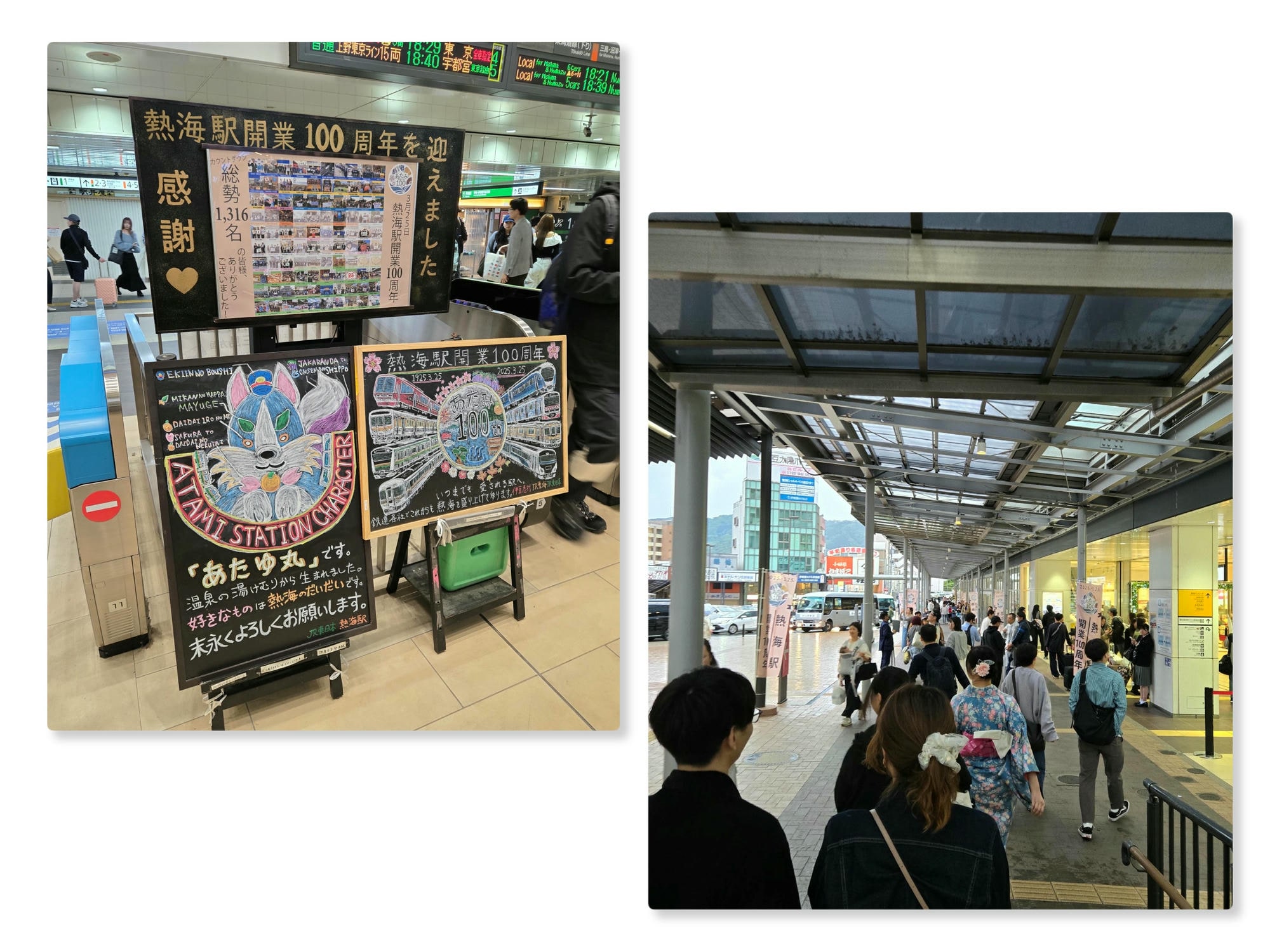
There was indeed a crowd that day, and I saw signs indicating congestion due to the fireworks festival.
However, perhaps because the weather was forecast to be rainy in the afternoon, there weren't as many people as I had imagined.
Right next to the station is a shopping complex. It's a bit different from the modern Japanese stations you usually see; the part connected to the station is newer, while Atami ATAMIX across the street feels quite old, with more small stalls.
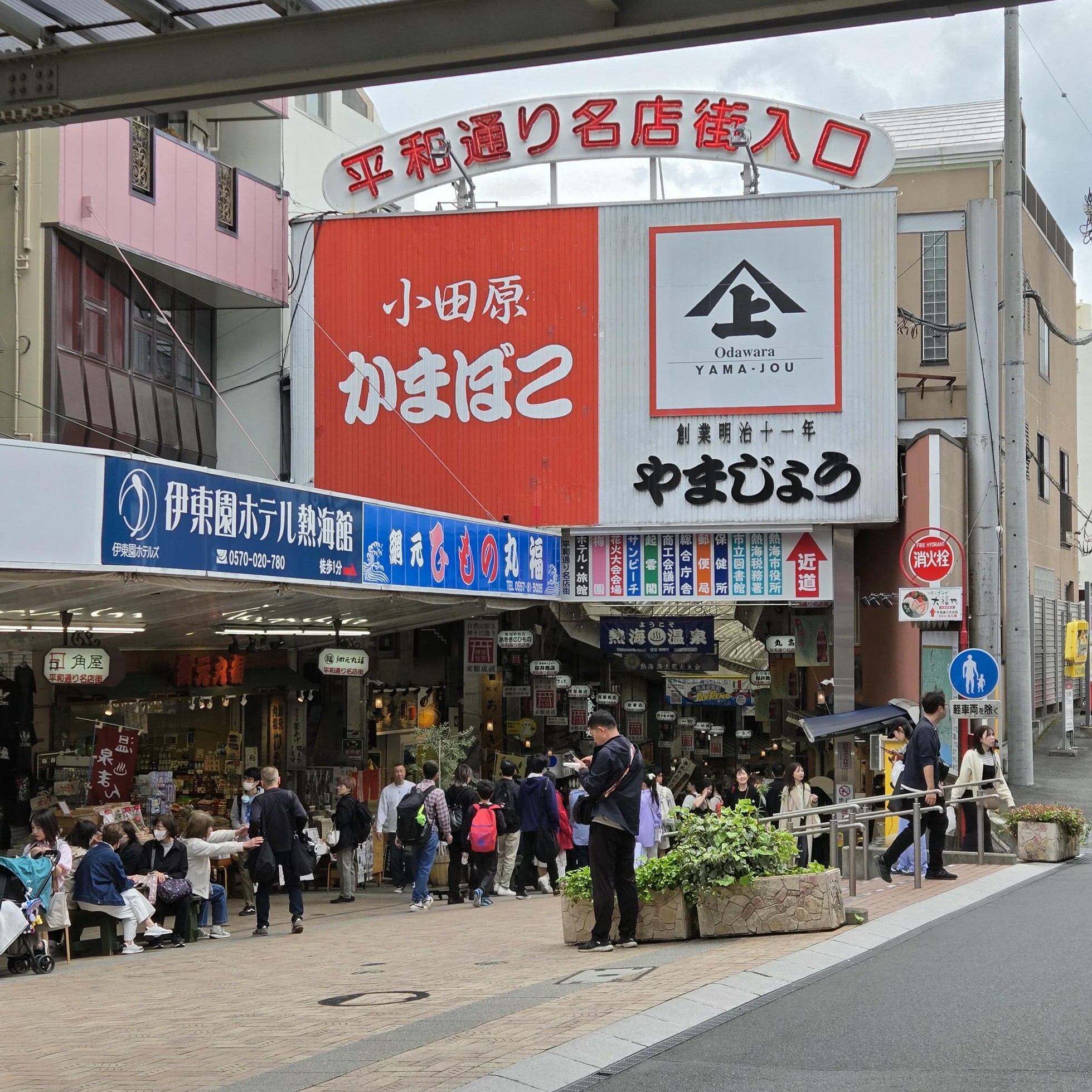
Exiting the station and following the path leads to Atami's famous Heiwa-dori Shopping Street.
Though not large, it was quite crowded, and people seemed friendly, giving it a distinct "shitamachi" (old town) vibe.
There weren't many foreign tourists that day, mostly Japanese, which gave it a traditional Japanese onsen town feel.
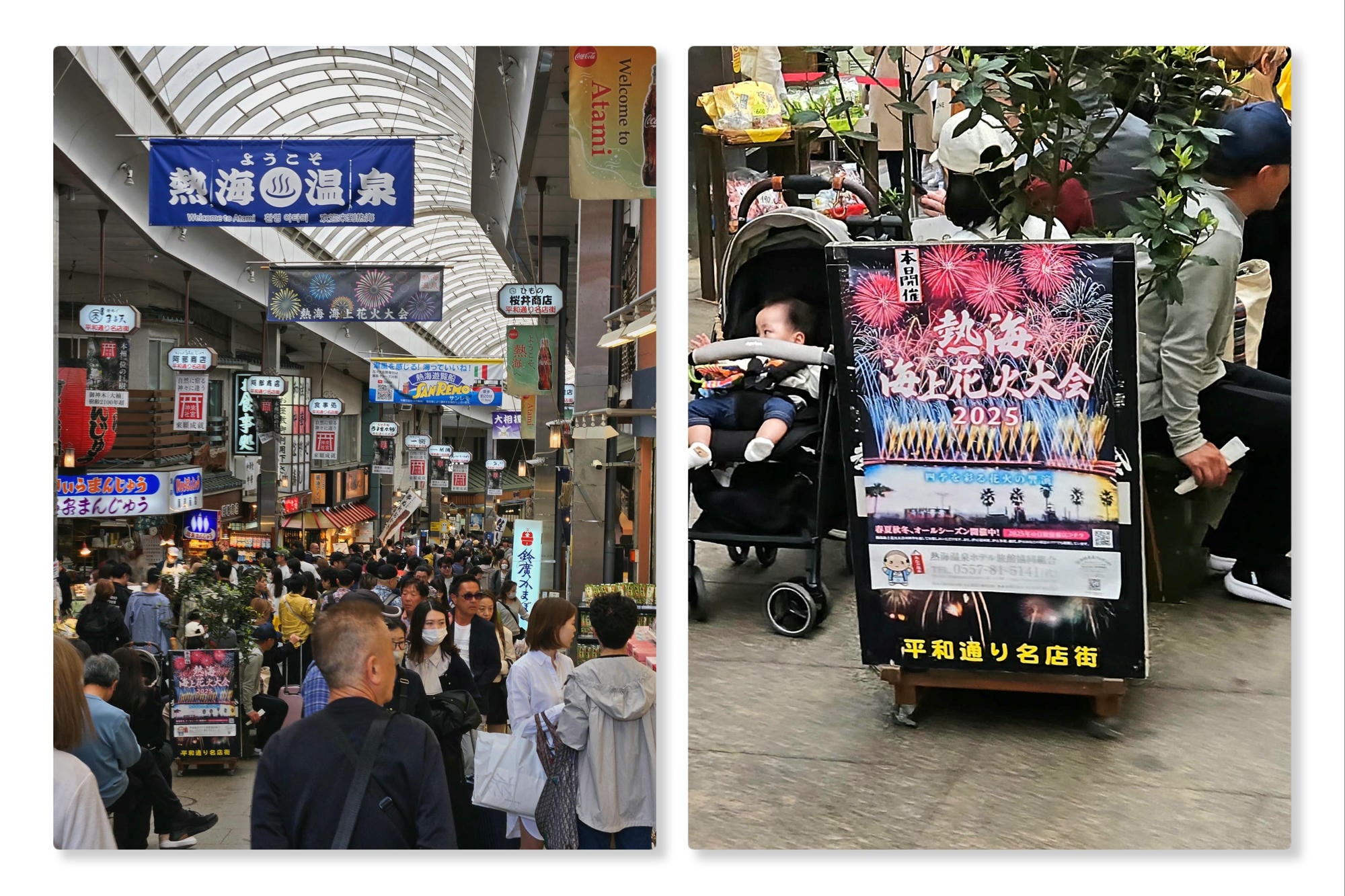
After a quick browse, I decided to return later and first embark on another customary shrine visit. The most famous shrine near Atami is來宮神社 (Kinomiya Shrine), which isn't small in terms of area.
It's a bit of a distance from the station, about a 20-30 minute walk, and it's uphill all the way, so it takes a bit more time to get there.
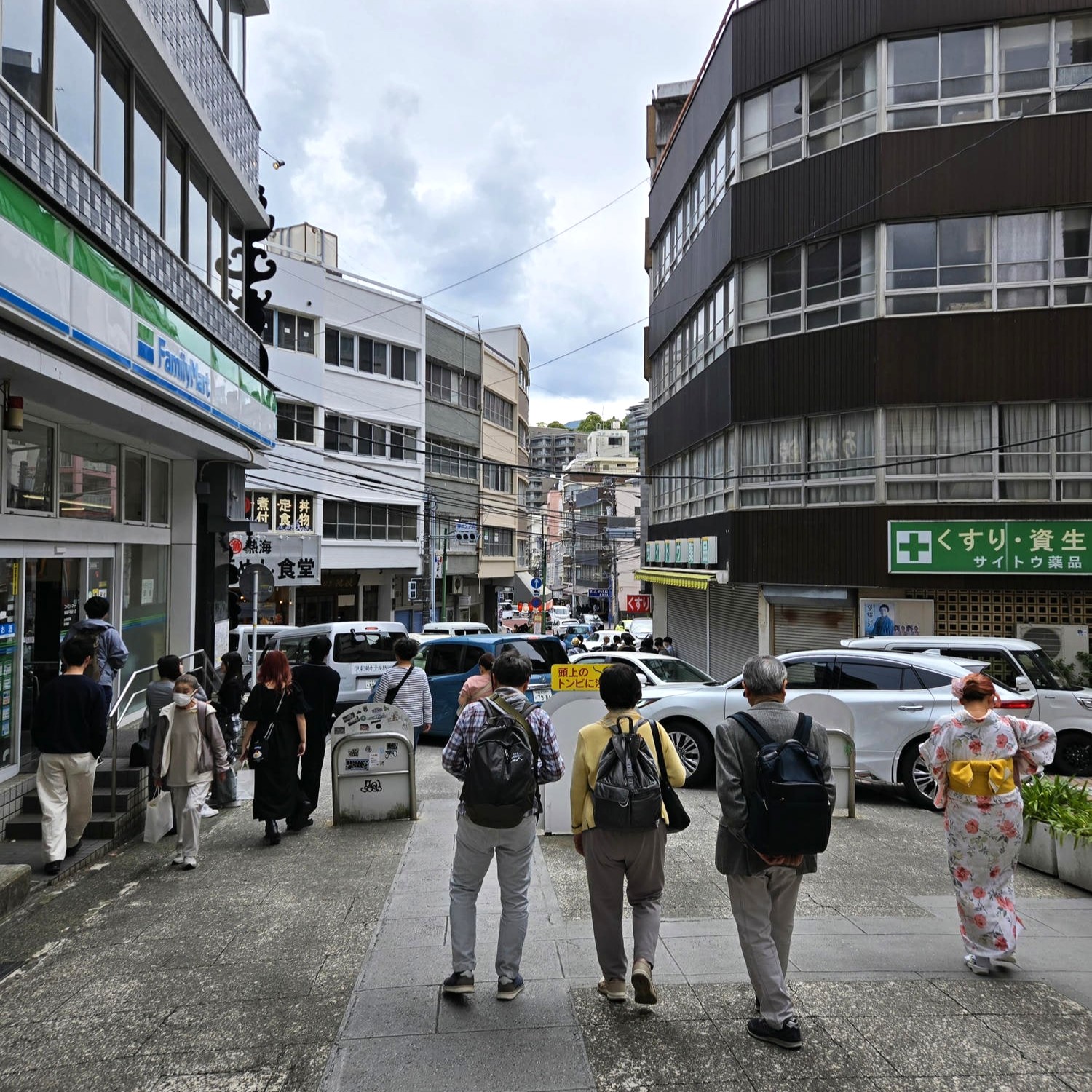
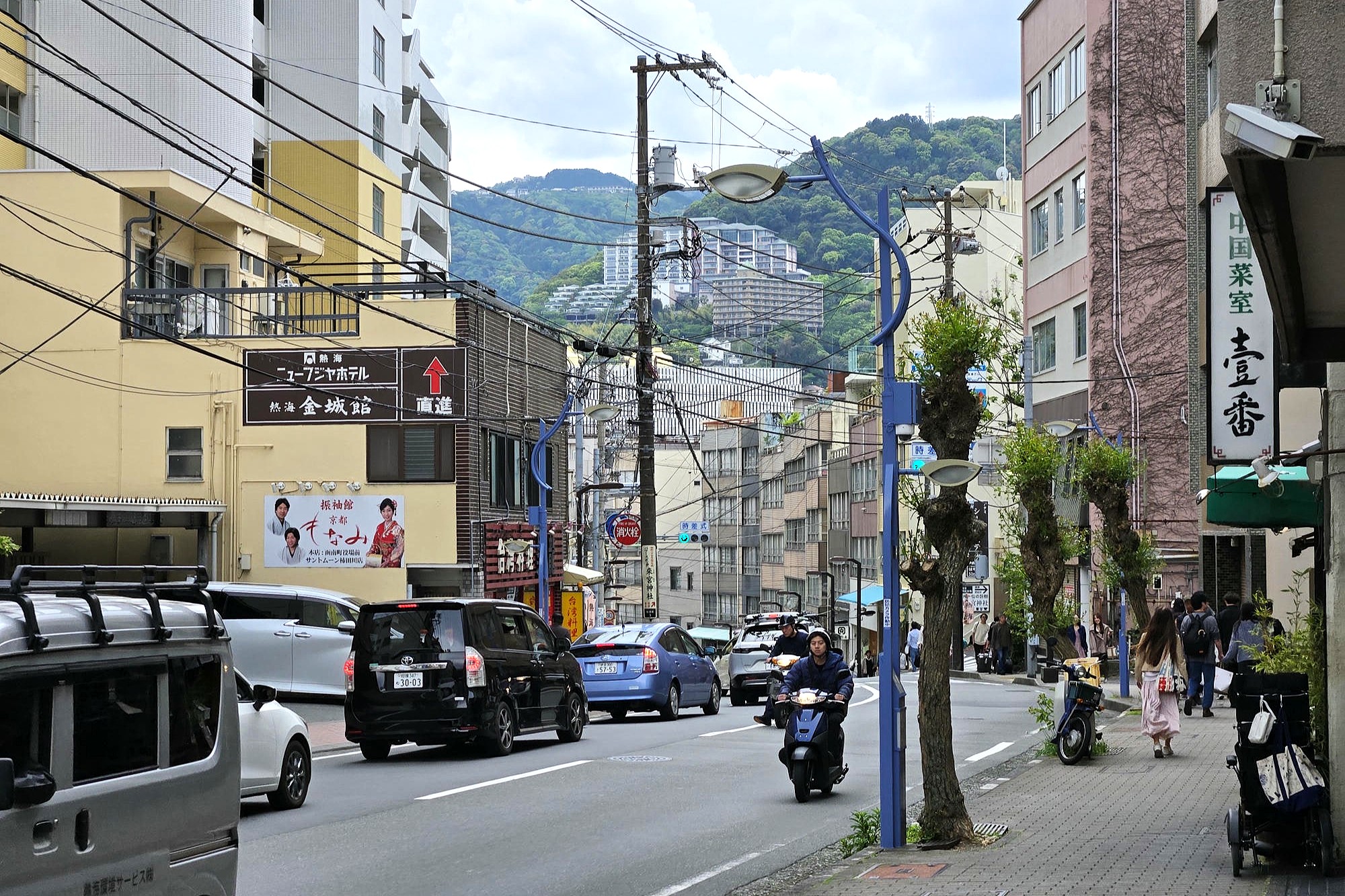
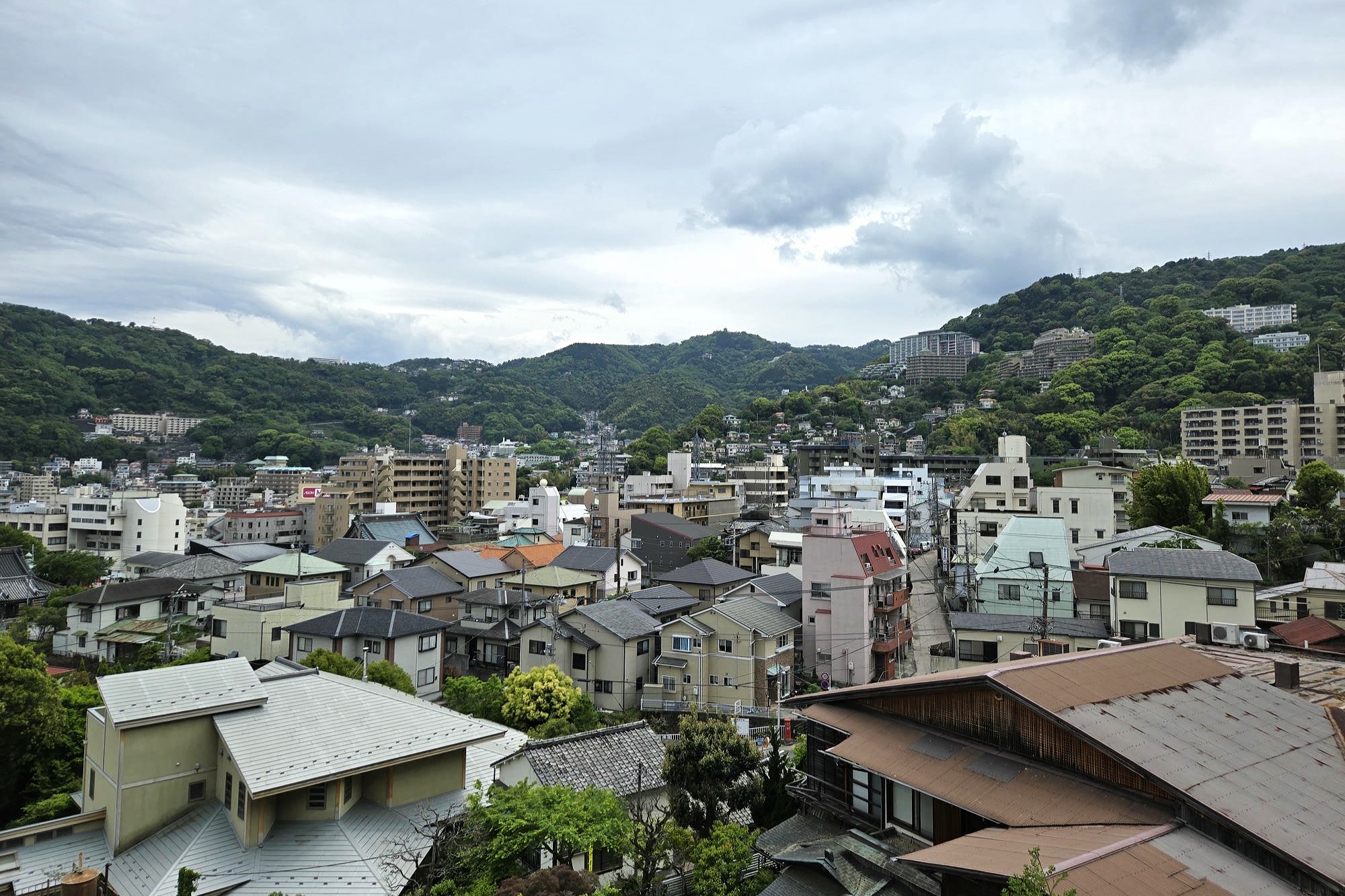
However, this walk was quite interesting because it took me through Atami's streets and alleys. The uphill climb also offered a slight panoramic view of Atami city, allowing for a better understanding of the city.
The Face of Atami
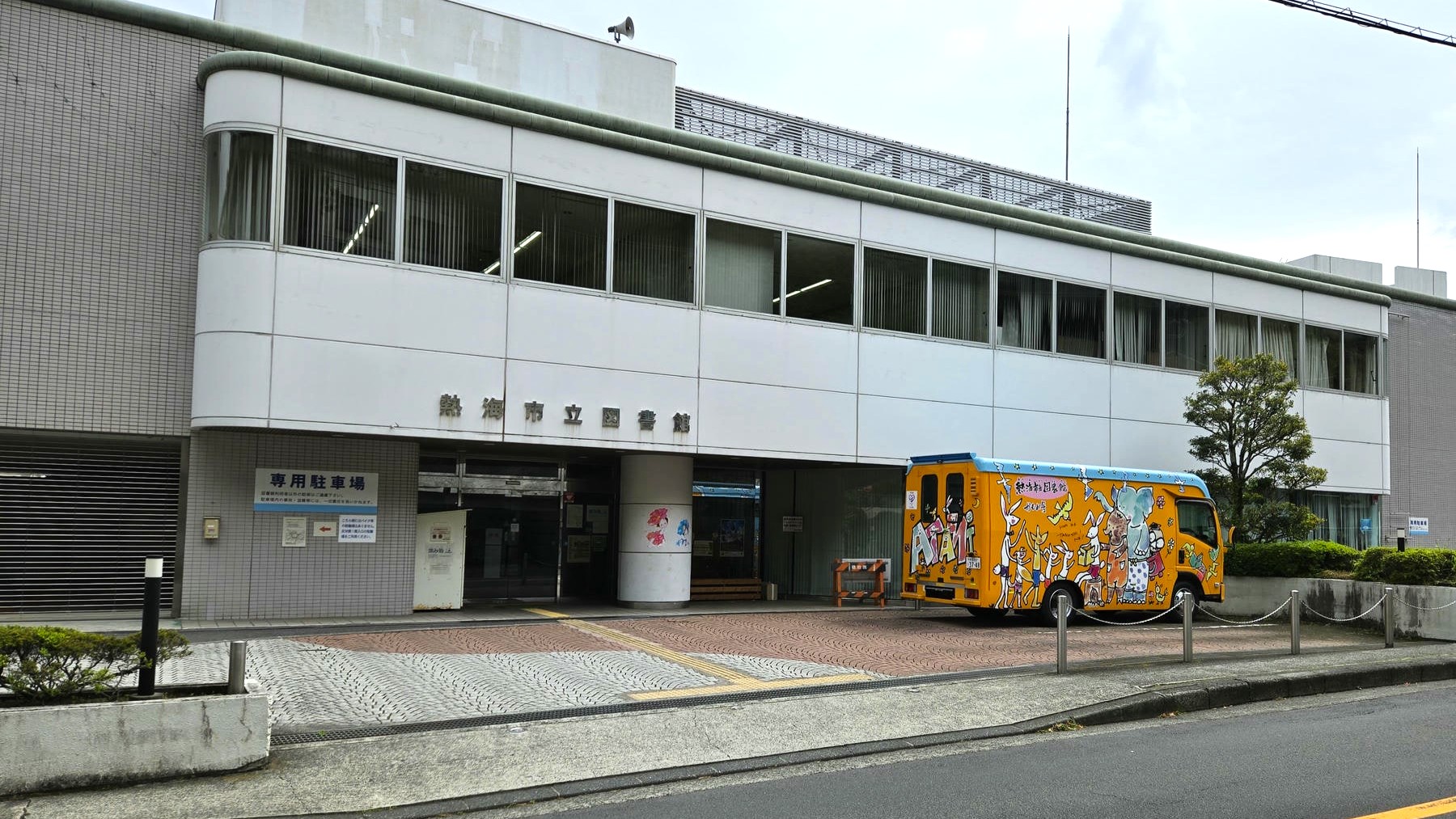
How to put it? Compared to the typical image of Japan, it's not as neat and modern here. The roads are narrower, and while there are sidewalks (they're quite small).
There's more of a distinct sense of everyday clutter. The city definitely has a lingering feeling of struggling to survive from the last century's bubble economy.
But people are still living vibrantly here.
It actually feels a bit like Beitou or Jiufen in Taiwan.
Kinomiya Shrine
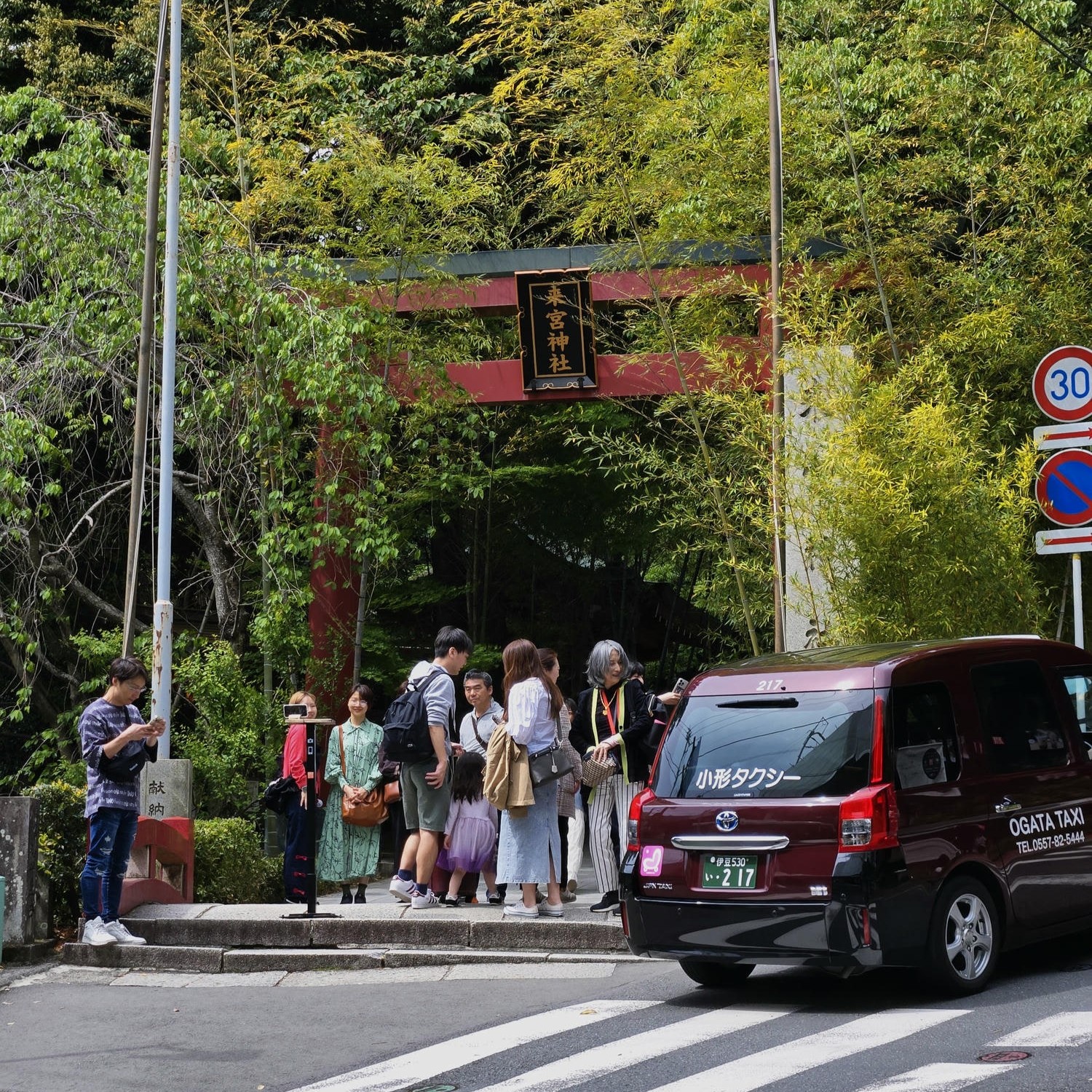
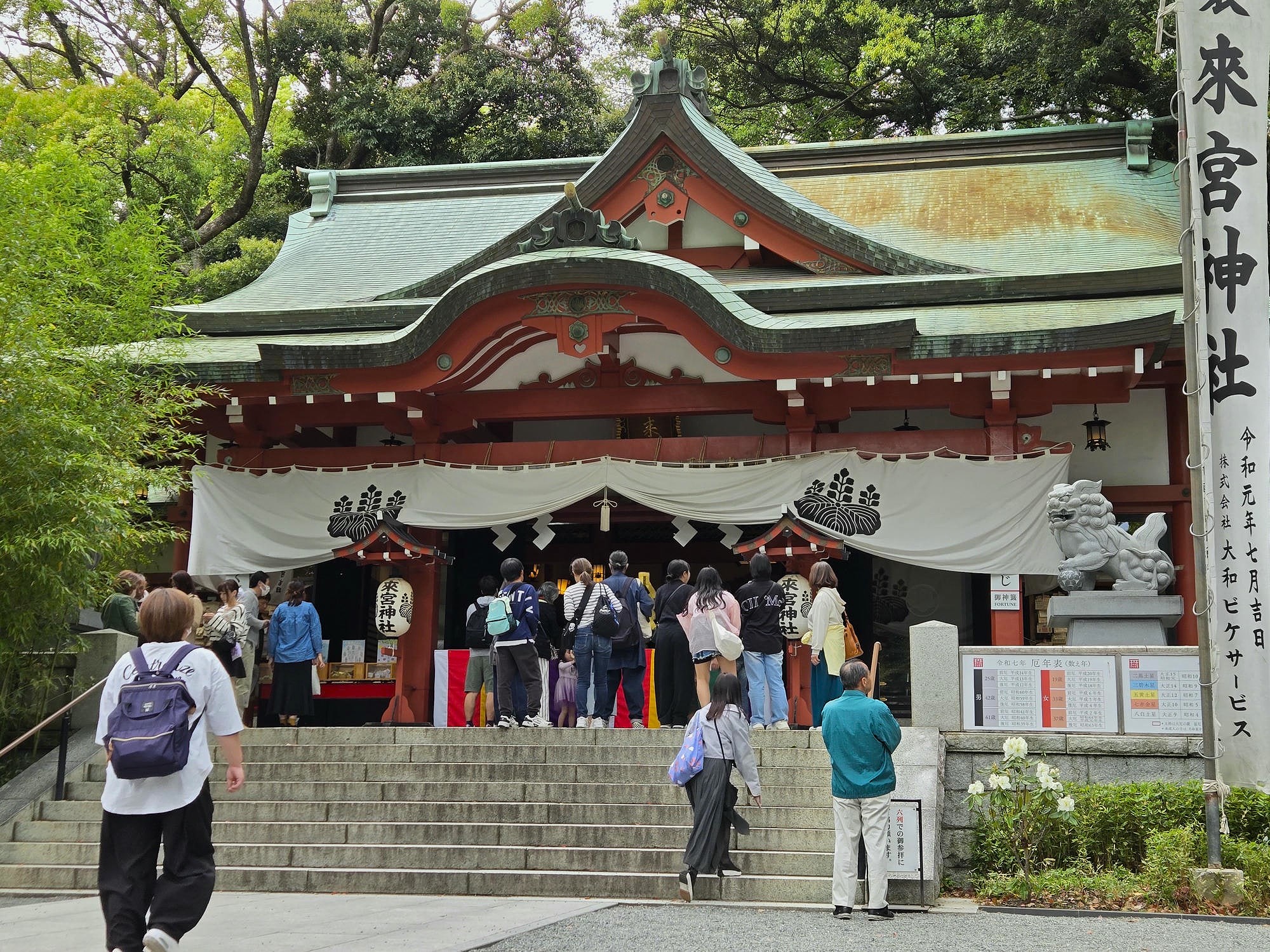
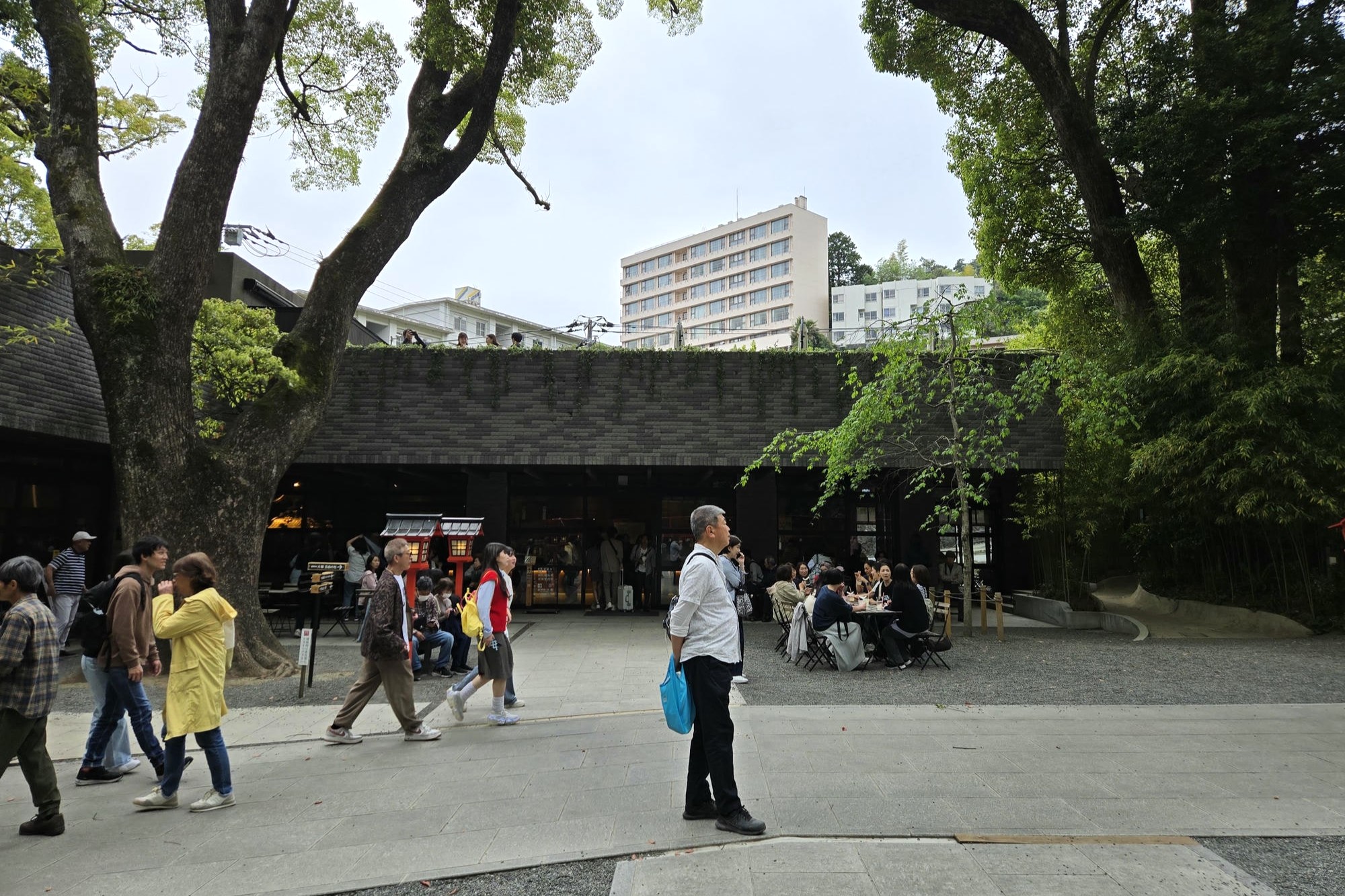
After walking for a while, I arrived at來宮神社 (Kinomiya Shrine).
There were more people than expected early that day. The entrance was enveloped by trees and vegetation, giving it a rather mysterious feel (but once inside, XD... I'll keep you in suspense).
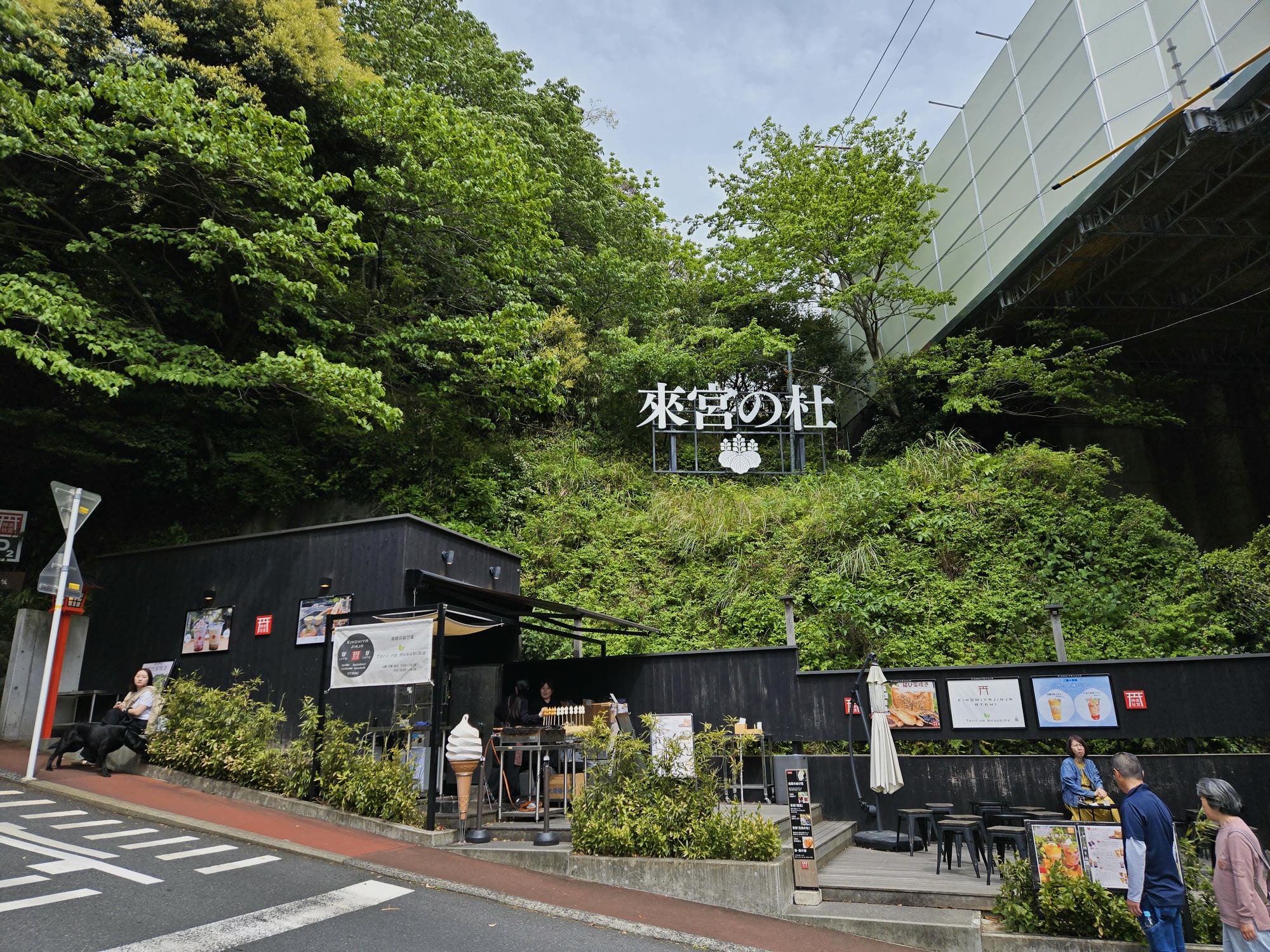
Kinomiya Shrine primarily enshrines來宮大明神 (Kinomiya Daimyojin), and also worships many other deities, known for granting good fortune.
It also boasts a rich history, with several sacred trees within its grounds.
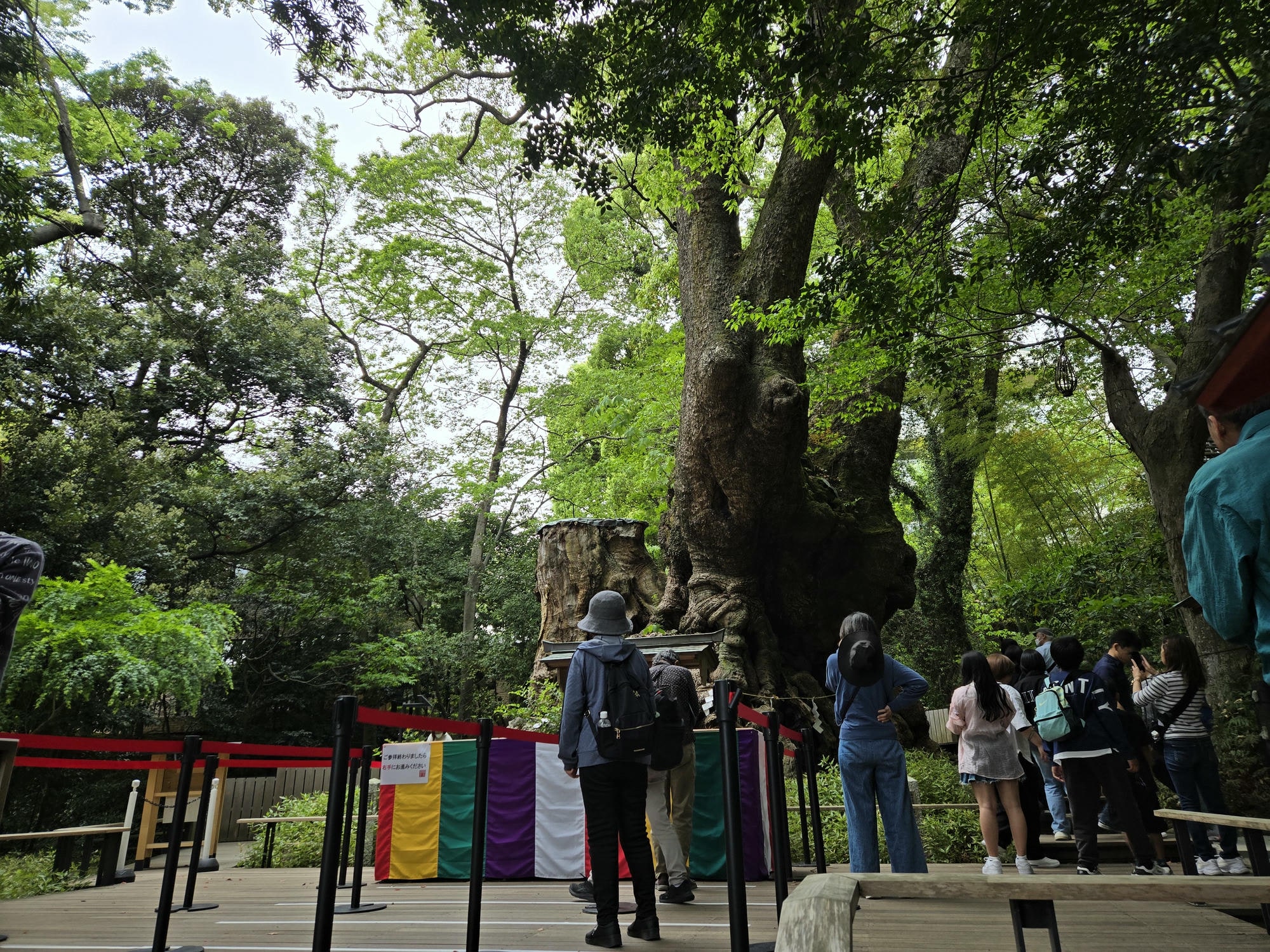
Most famous is Japan's second-largest camphor tree, revered as a national treasure and sacred tree for over two millennia, attracting many visitors who come to pray for health and longevity.
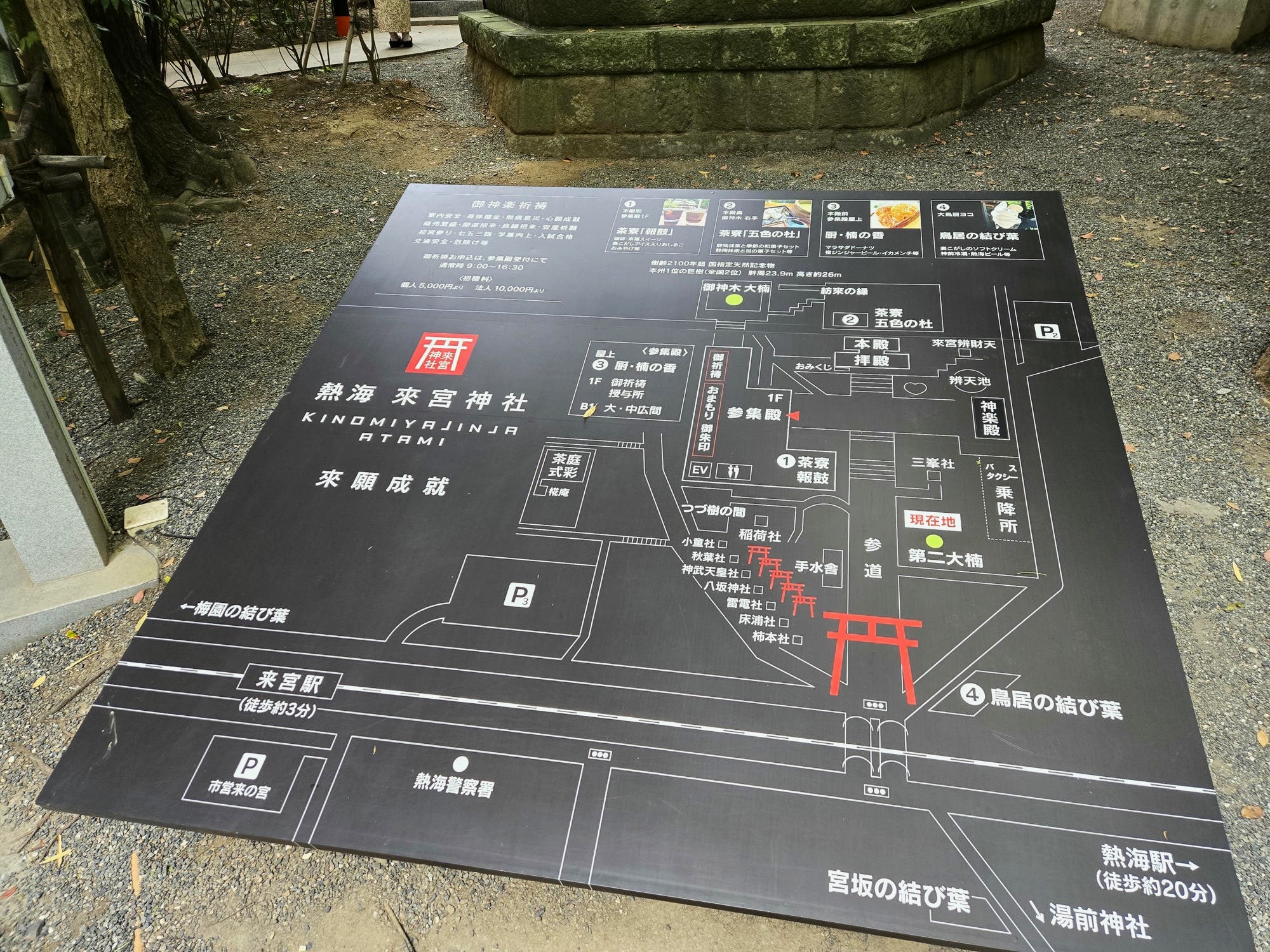
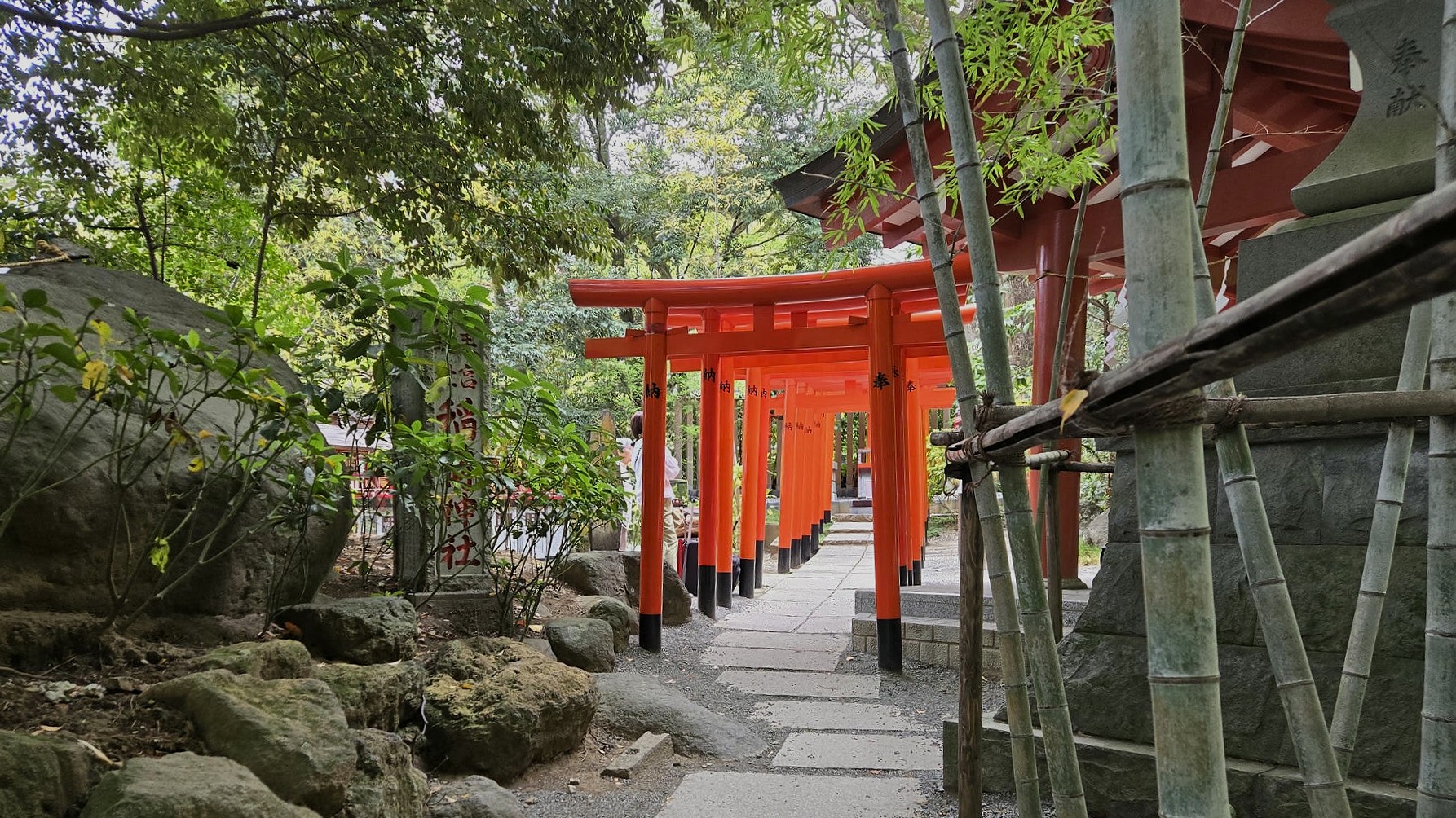
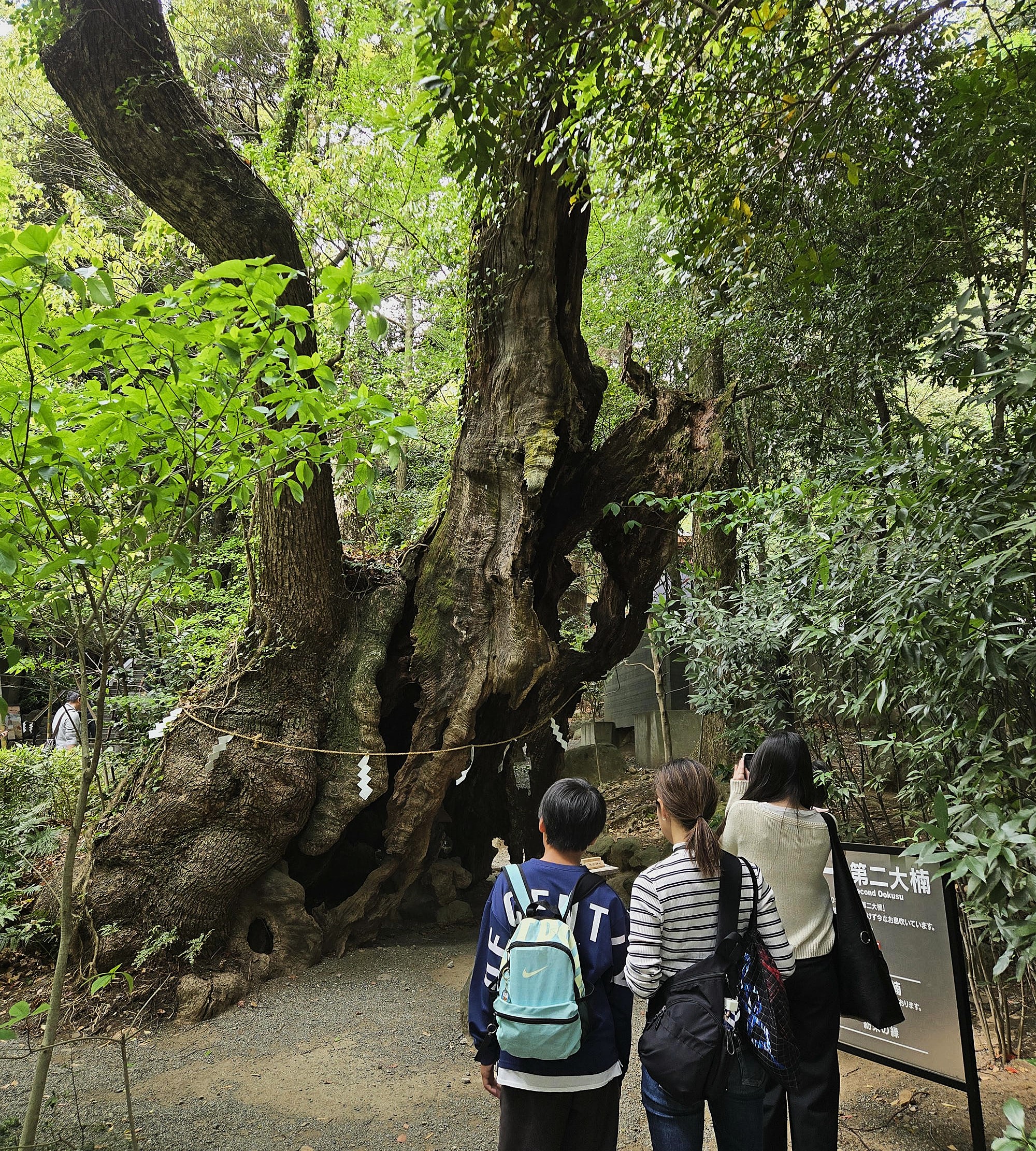
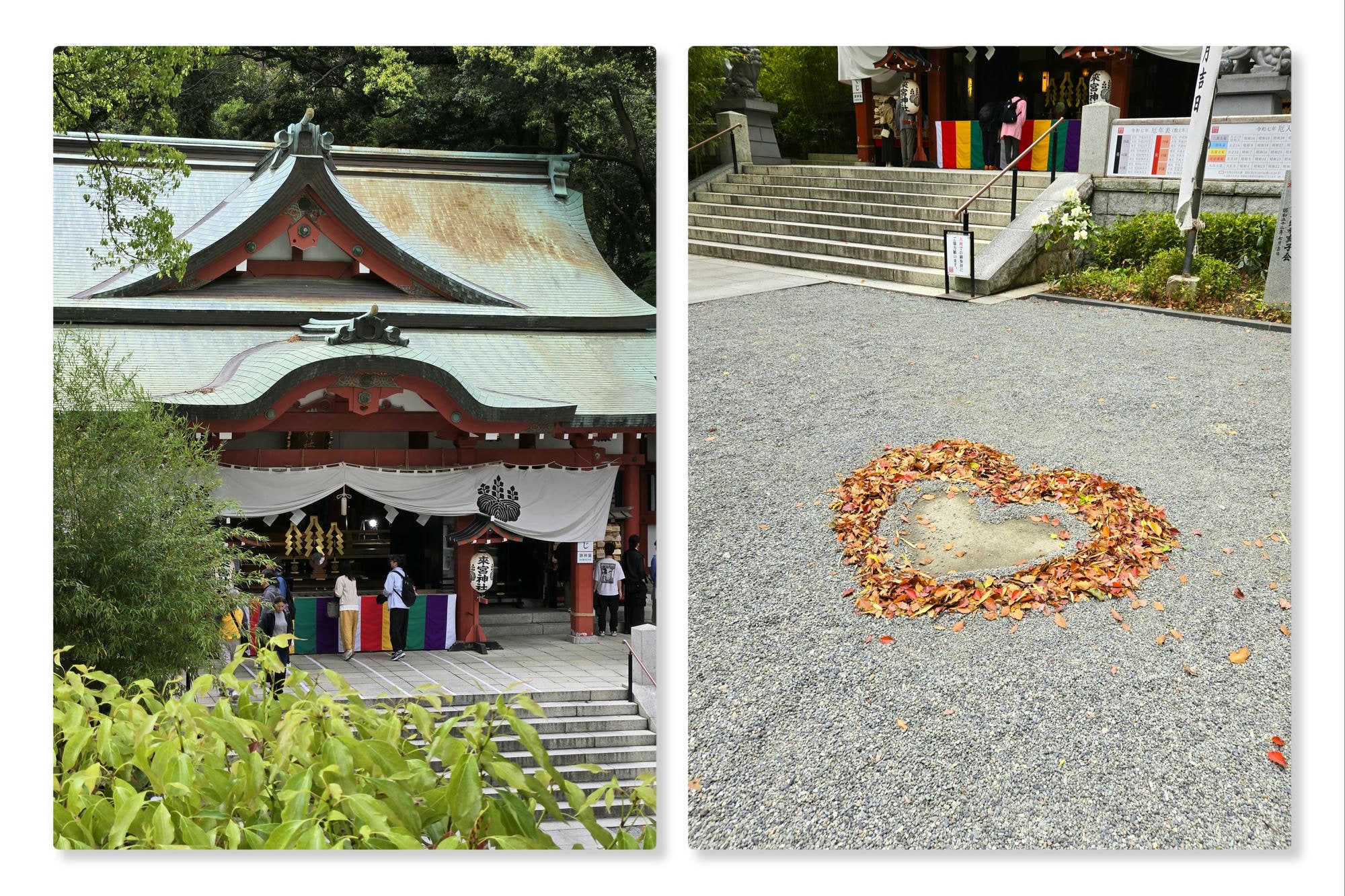
Walking further up, behind the main hall, you'll encounter Kinomiya Shrine's most famous sacred tree, over two millennia old -御神木:大楠 (Goshinboku: O-Kusu, Great Camphor Tree).
Japan's second-largest camphor tree is located here in Atami.
Although there were many people around, everyone was quietly making wishes.
Behind the sacred tree, there's a platform extending to the second floor of the office next to the main hall. Besides signs, there are also photo spots here.
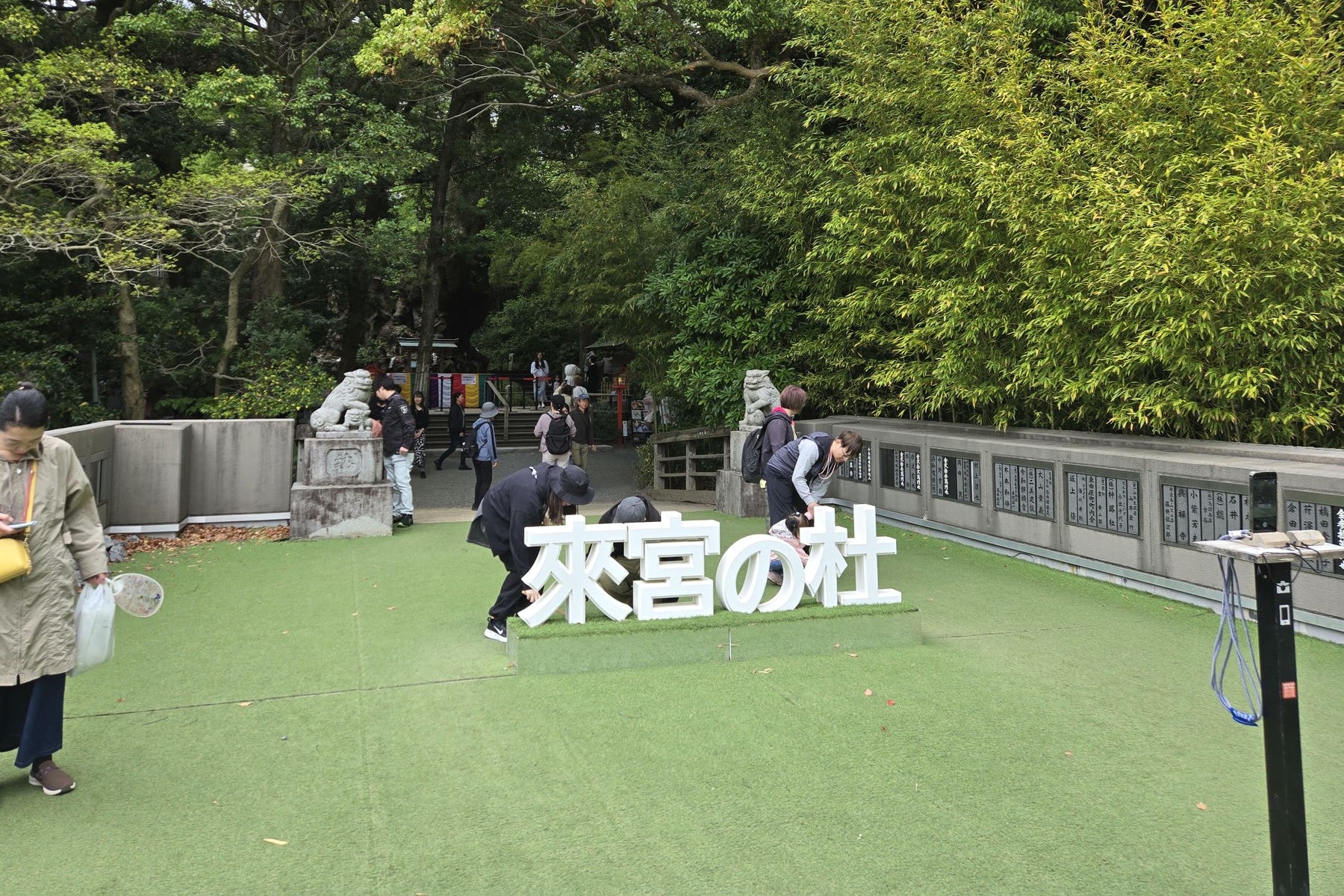
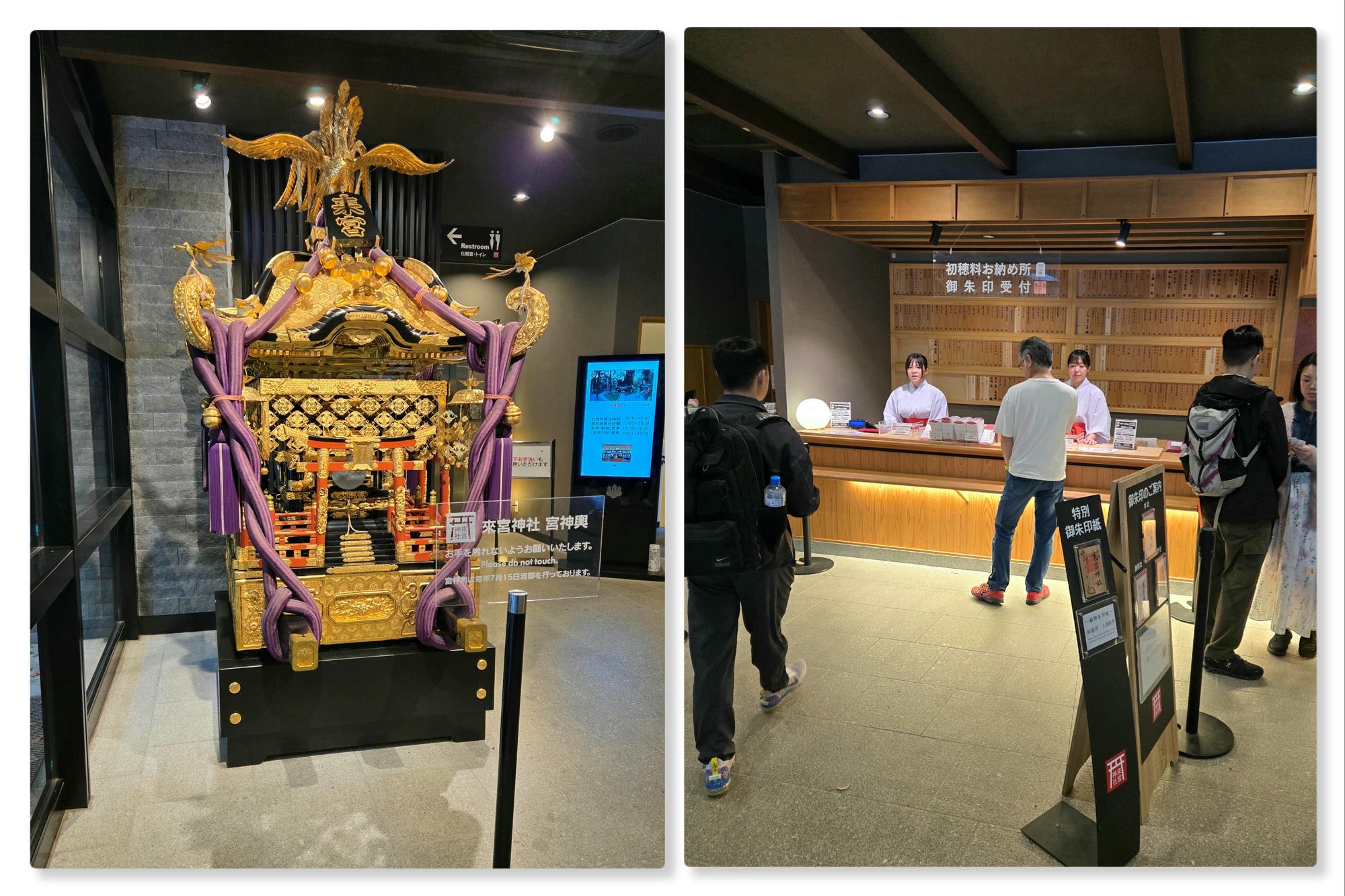
Beyond its history, what's quite unique about this shrine is its modern feel... it seems to have undergone special design and renovation.
There are various photo spots and two or three snack areas within the shrine (one just past the second floor here).
There's also a cafe next to the shrine office. Furthermore, you can purchase omamori (charms), goshuin (red stamps), and even pay for prayers using credit cards or electronic payments.
This truly opened my eyes.
Eating and Drinking in the Shopping Street
Next, I returned to the shopping street to grab some snacks. I was quite hungry, having only had a simple onigiri earlier that morning.
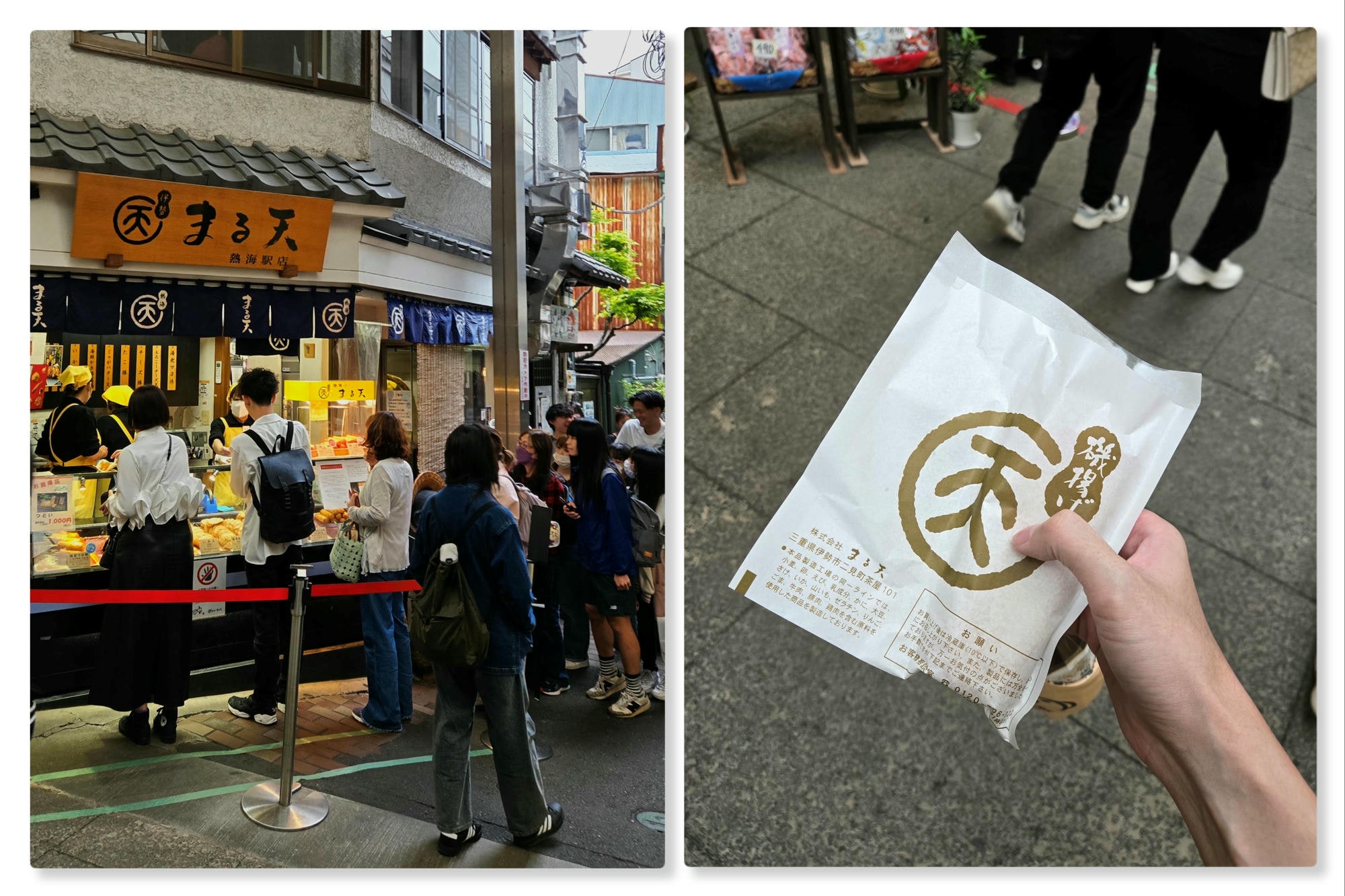
First, I bought a takoyaki... fish paste tempura skewer fromまる天 (Maruten), which I saw recommended by an "old spicy girl" (blogger/influencer).
It was quite substantial, and I could taste the octopus. The flavor was decent, and it was nice and hot.
Then I went to buy Atami's famous pudding -熱海プリン 1号店 (Atami Purin No. 1 Shop), which is considered a representative snack of Atami.
There was a long queue for the pudding. At first, I was confused, but then someone directed me to a separate waiting area they had specially arranged further down.
I waited for about 20-30 minutes to buy it, and it started to drizzle, which wasn't a good sign.
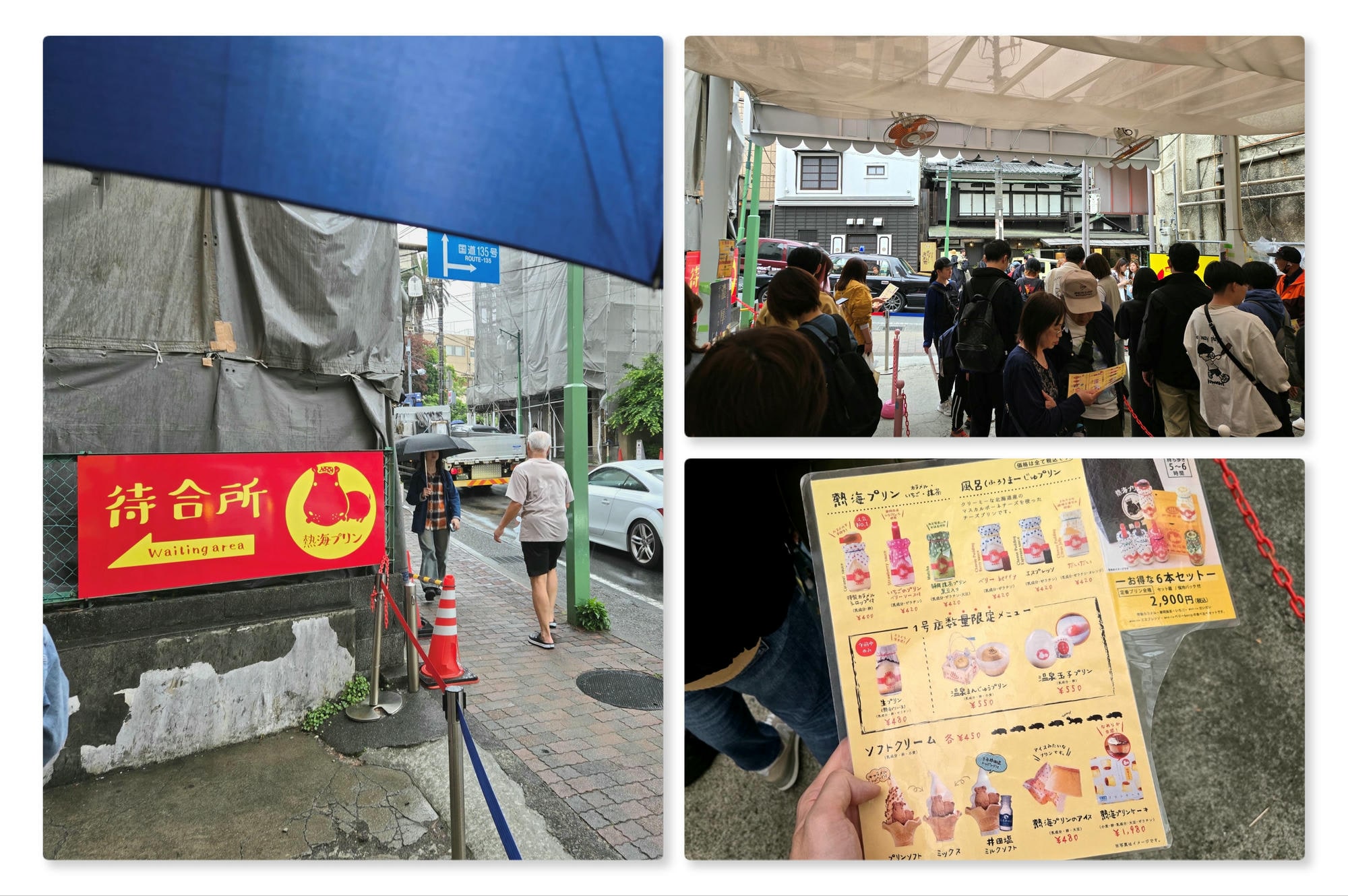
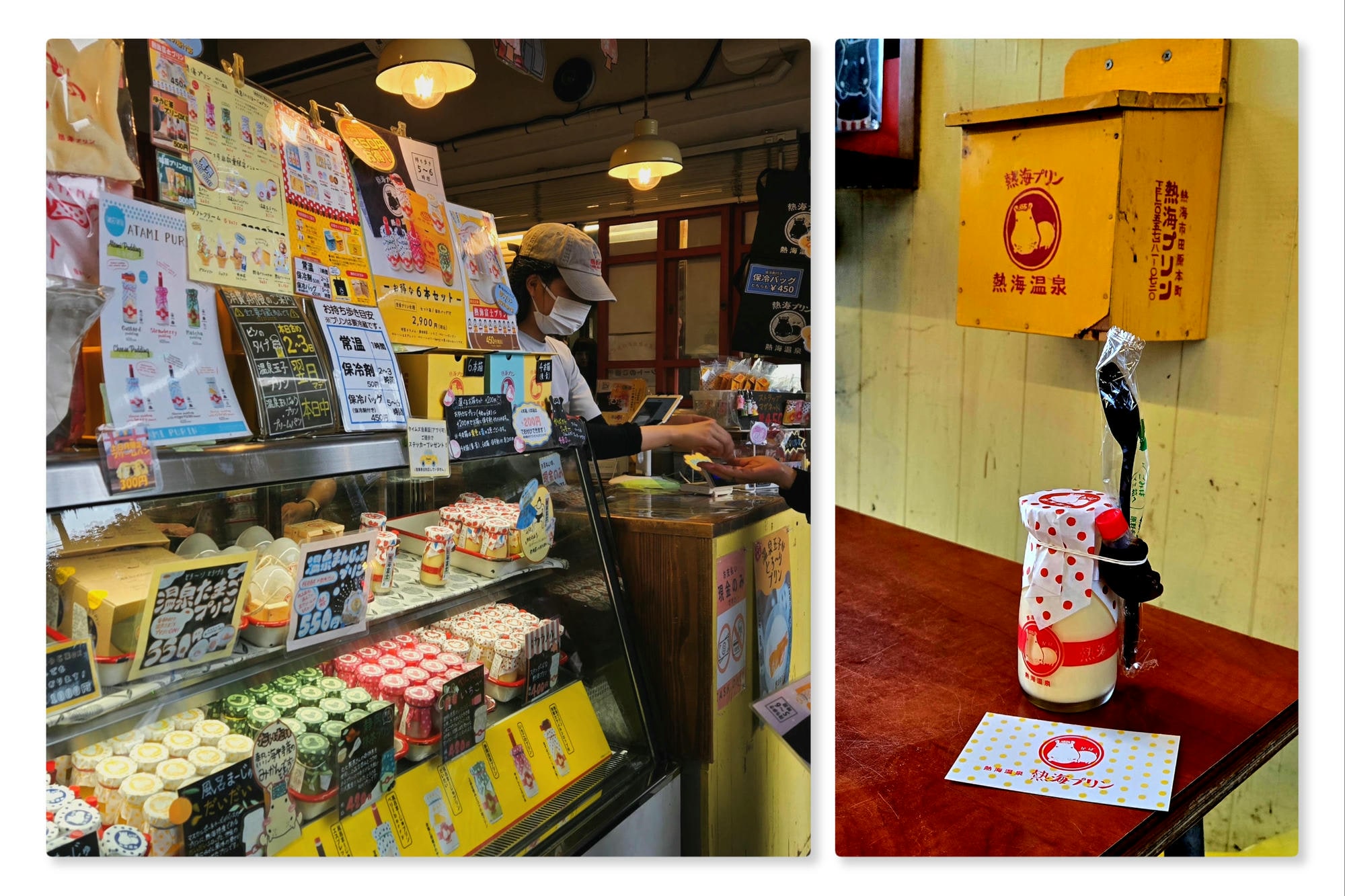
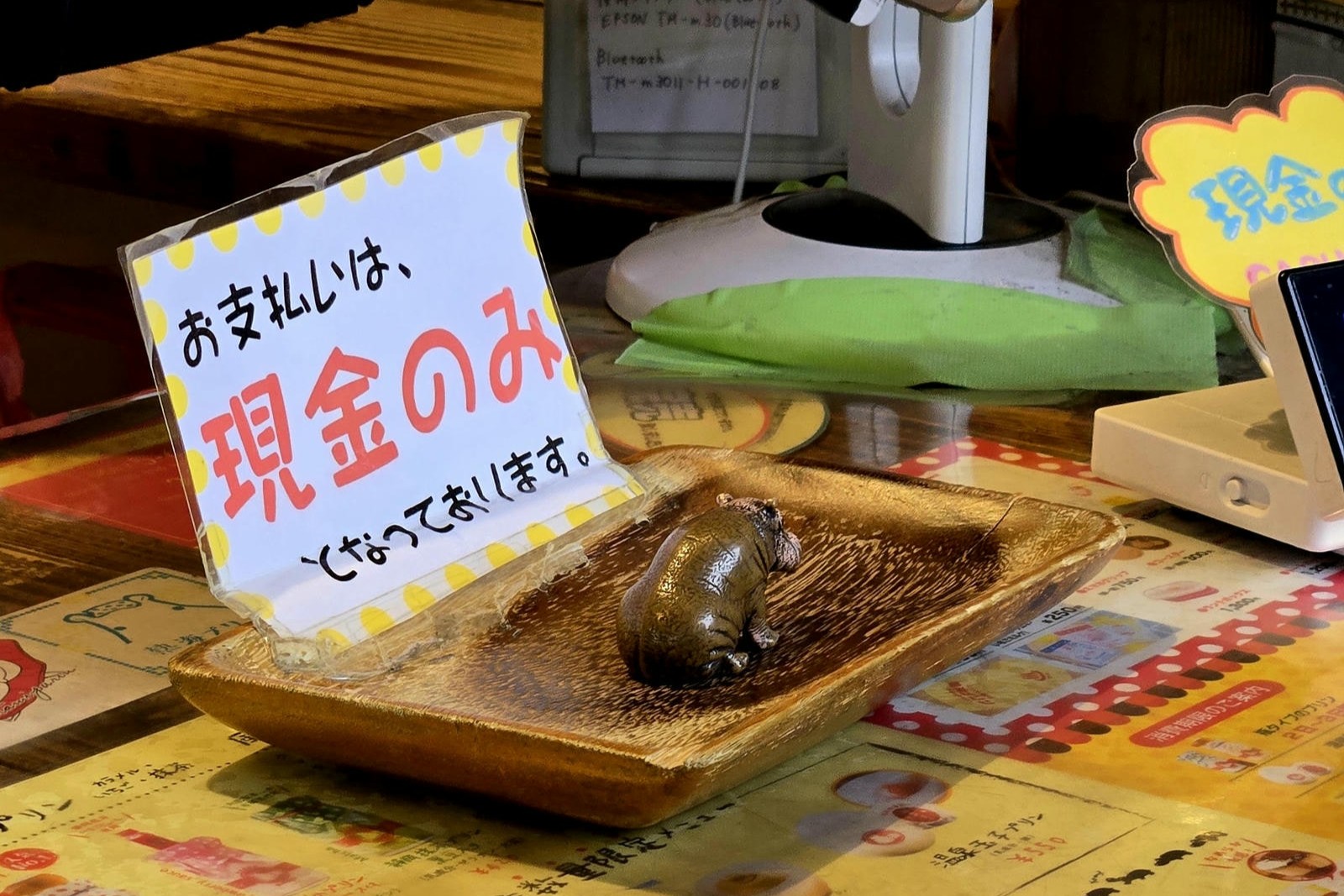
I bought a classic signature flavor. After getting it, I realized time was short, so I headed to the next stop, Atami Castle, to visit the prototype of the Crayon Shin-chan Sweet Boys Club, planning to eat the pudding along the way.
The pudding's taste was okay, I thought. It was on the lighter side, but you could tell it was handmade.
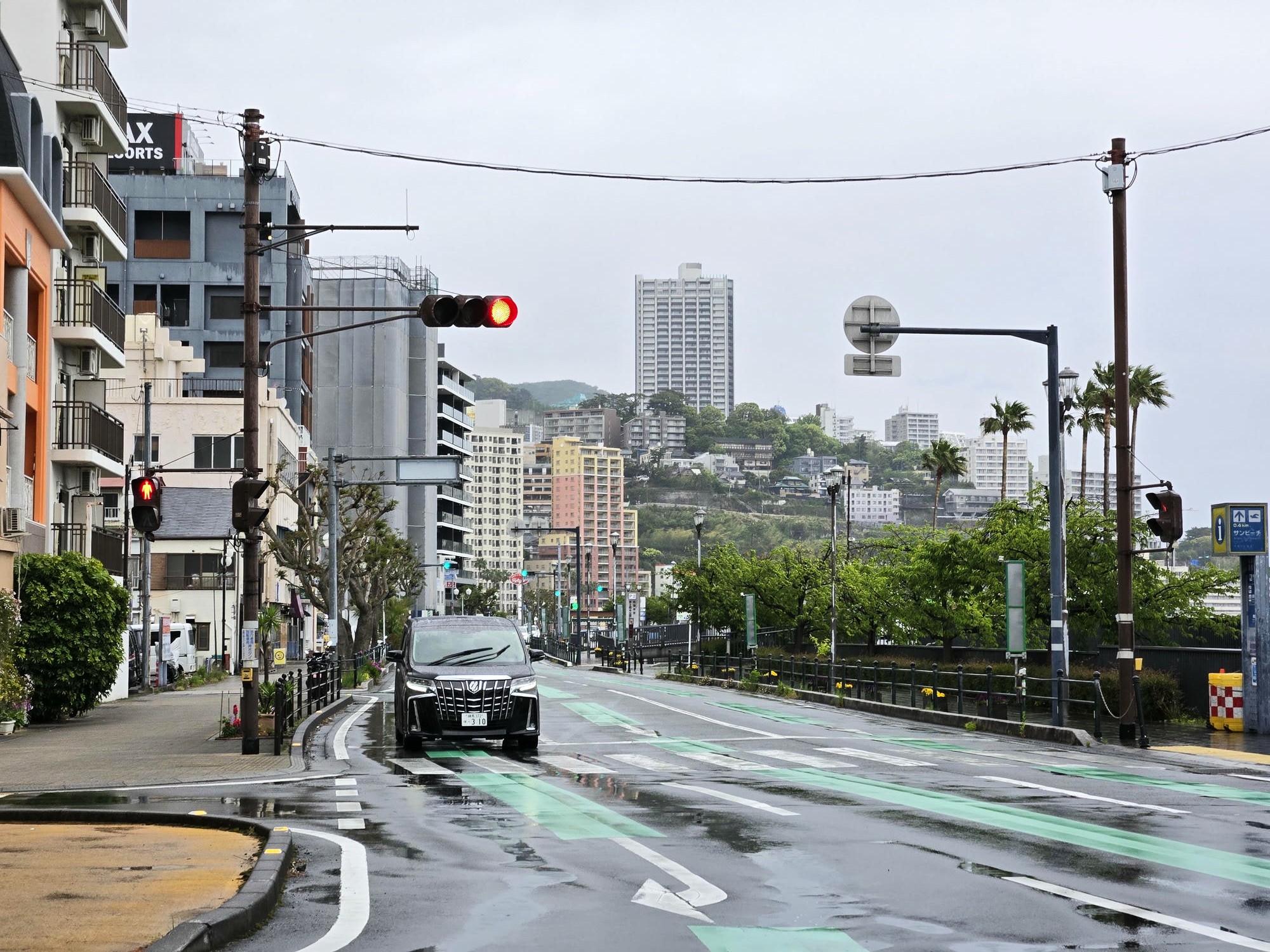
Atami Castle is situated on a hill, so to get there, you first need to go to the Atami Ropeway Station.
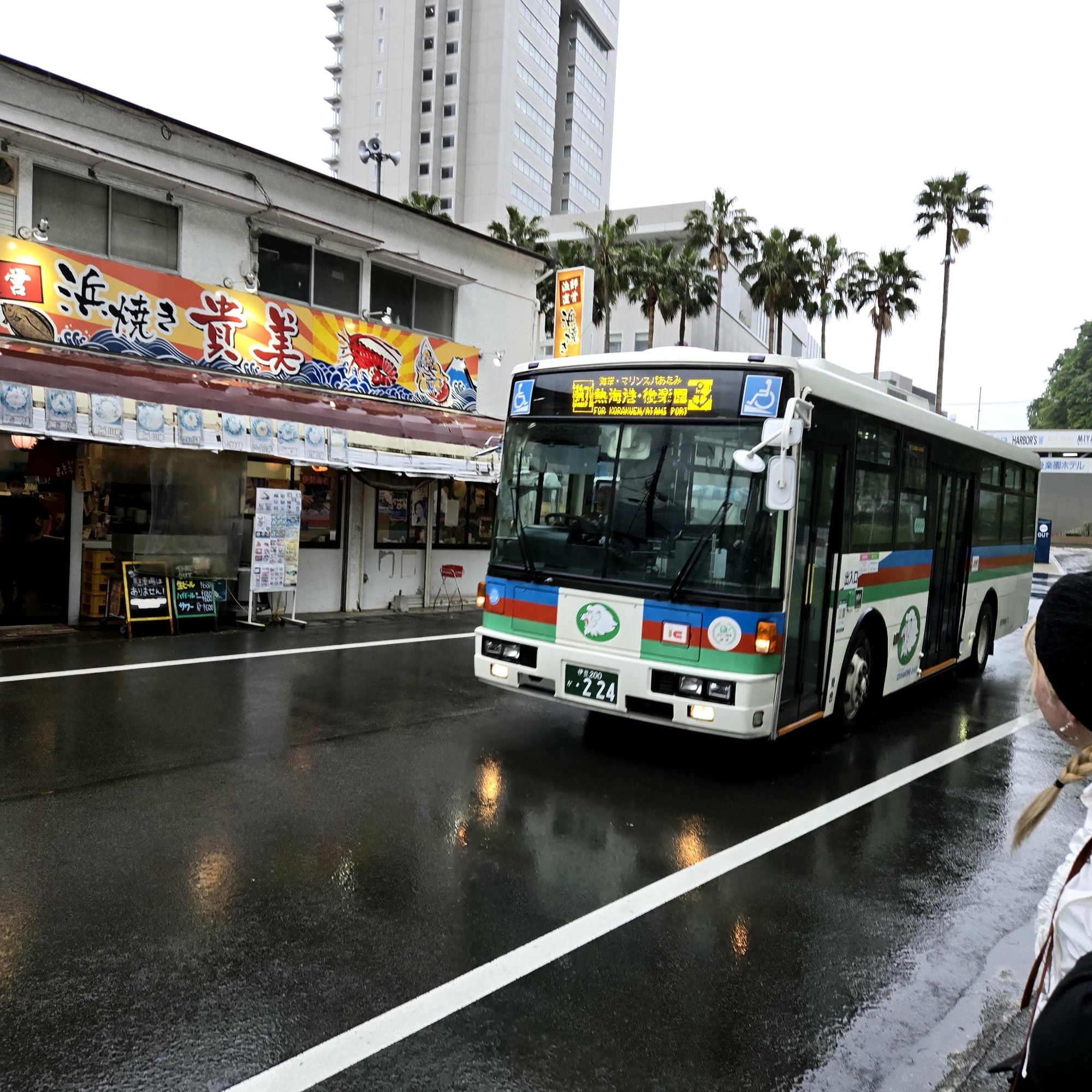
I walked all the way from Atami Shopping Street, which was quite a distance, about 20-30 minutes. It was raining that day, making me feel a bit disheveled. Next time, I should consider taking a bus directly from the station, like I did on the way back...
Along the way, perhaps because it's near the sea, there was more of a resort atmosphere, with yachts and more upscale hotels appearing one after another.
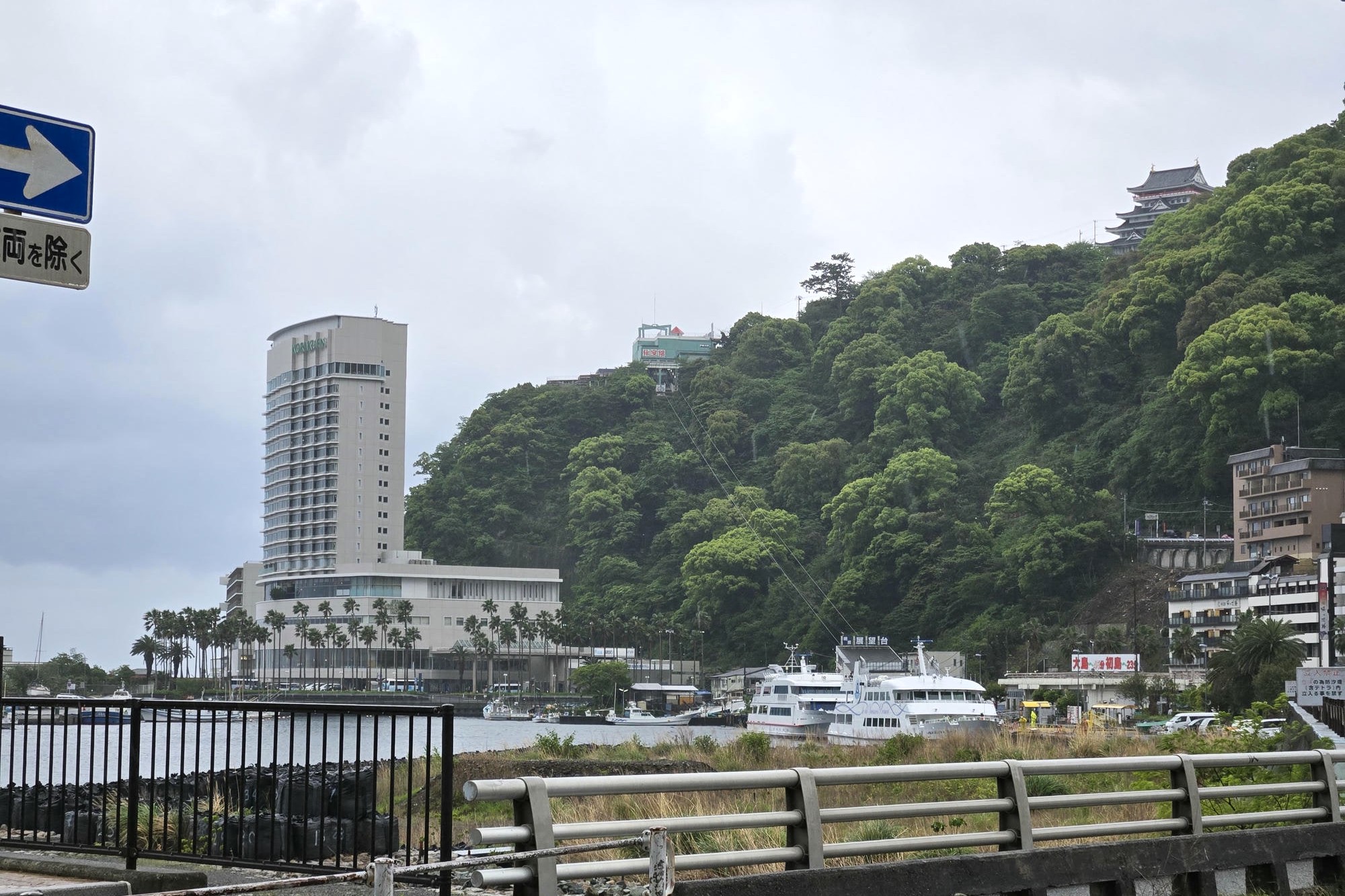
Atami Ropeway Station
Base Station - Korakuen Station
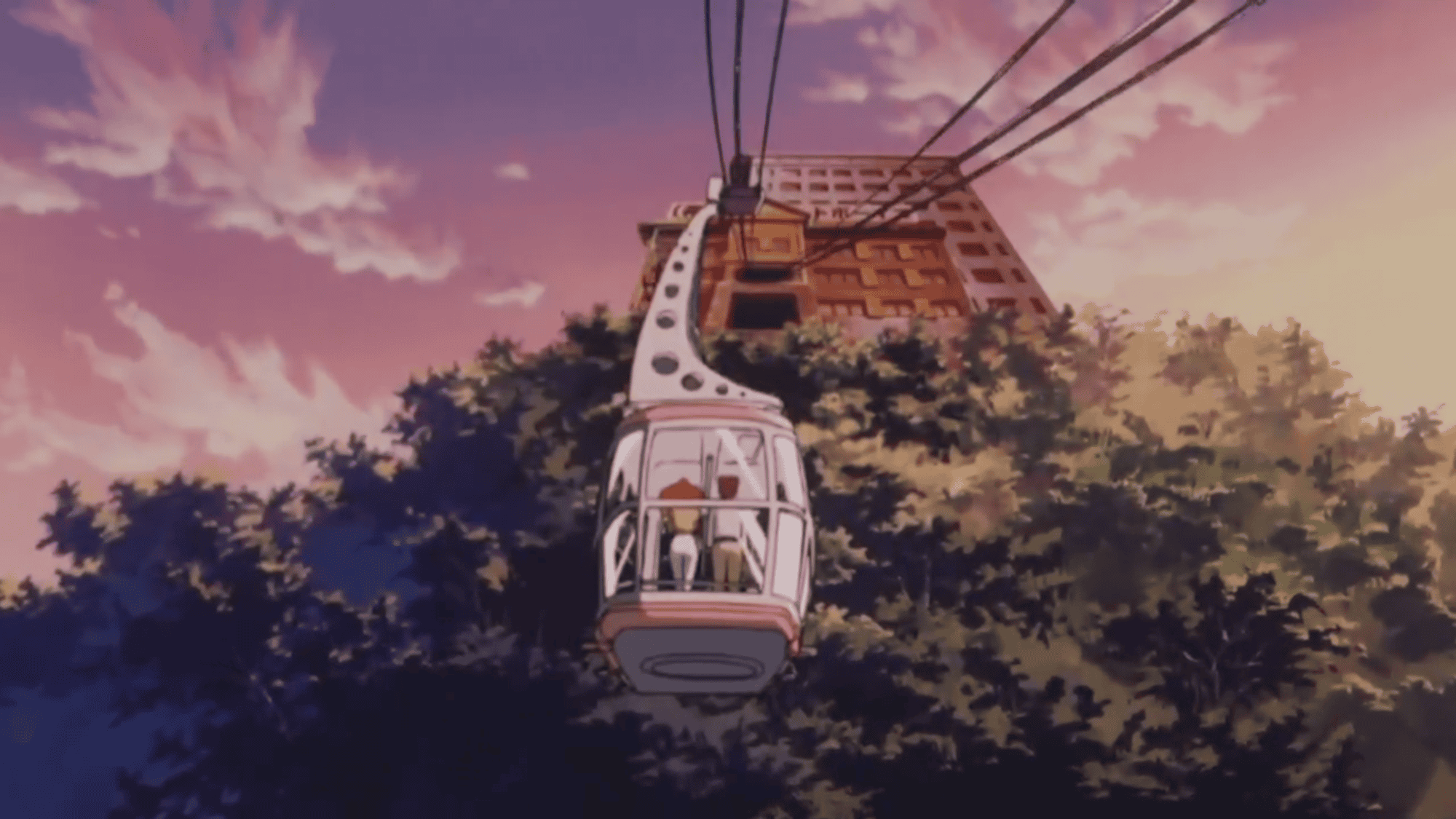
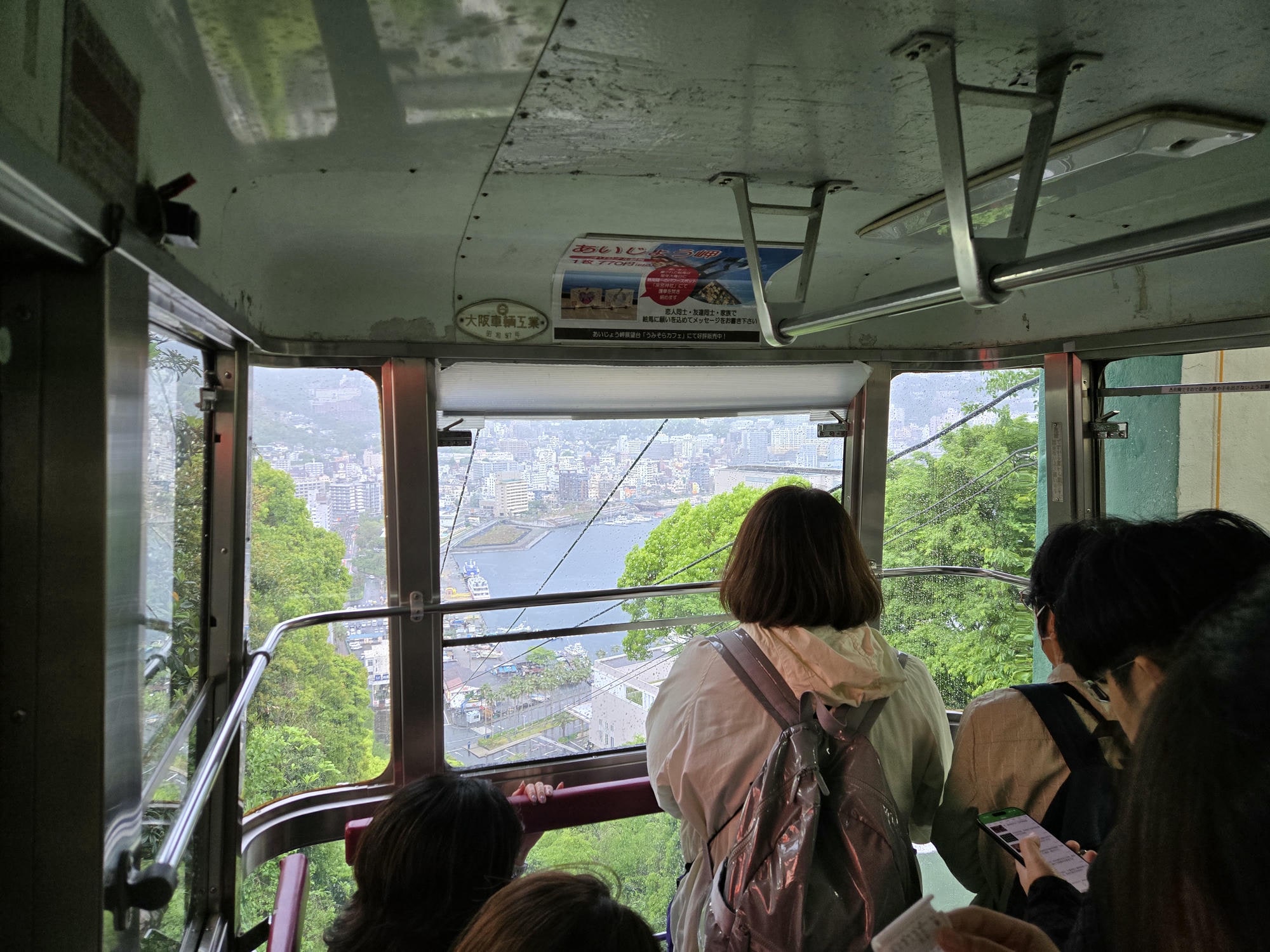
After walking for a while, I reached the Atami Ropeway, which is the prototype for the Sweet Boys Club cable car in Crayon Shin-chan.
Since I didn't have much time, I only bought a round-trip ticket to enjoy the scenery. If needed, you can also buy a combined ticket for Atami Castle/Atami Hihokan (Secret Treasure Museum) at the top.
The entire ropeway and its station felt quite old. I wondered if they intentionally maintained this style.
With the rain that day, it looked even more dilapidated.
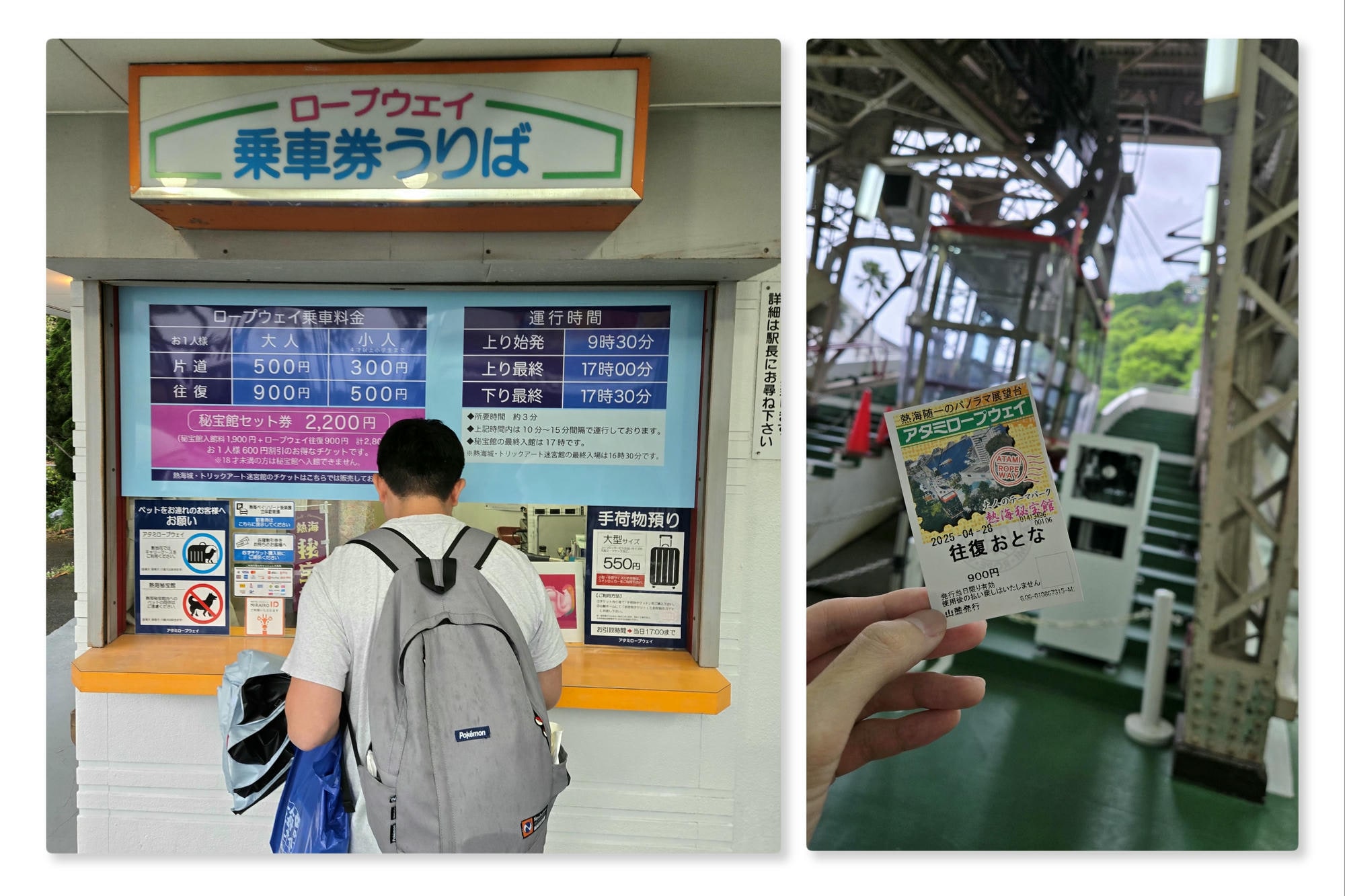
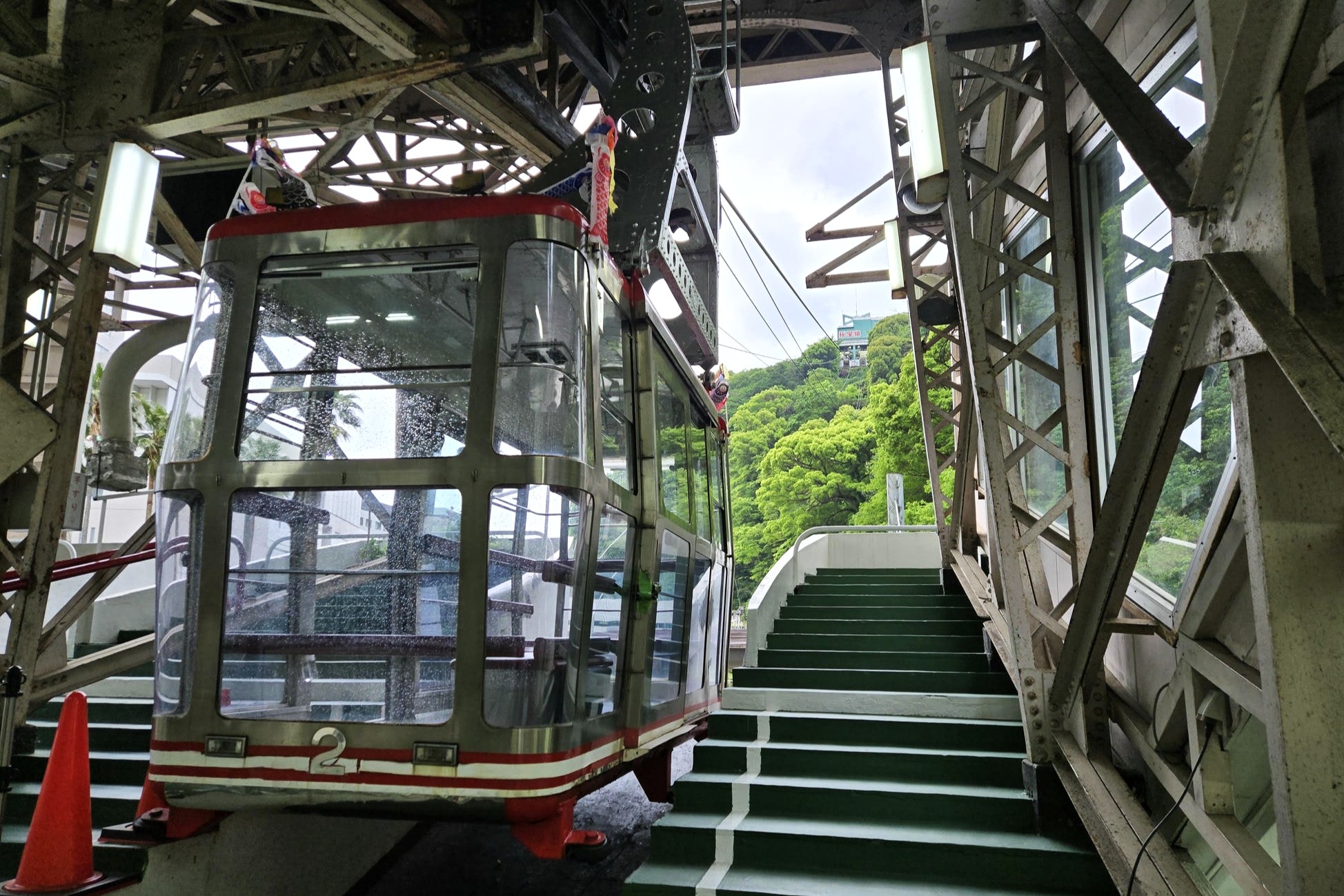
Although it was a bit run-down and foggy due to the rain, childhood anime memories flooded back. Was this the cable car to the Sweet Boys Club? I was still quite happy.
Summit Station - Hachimanyama Station
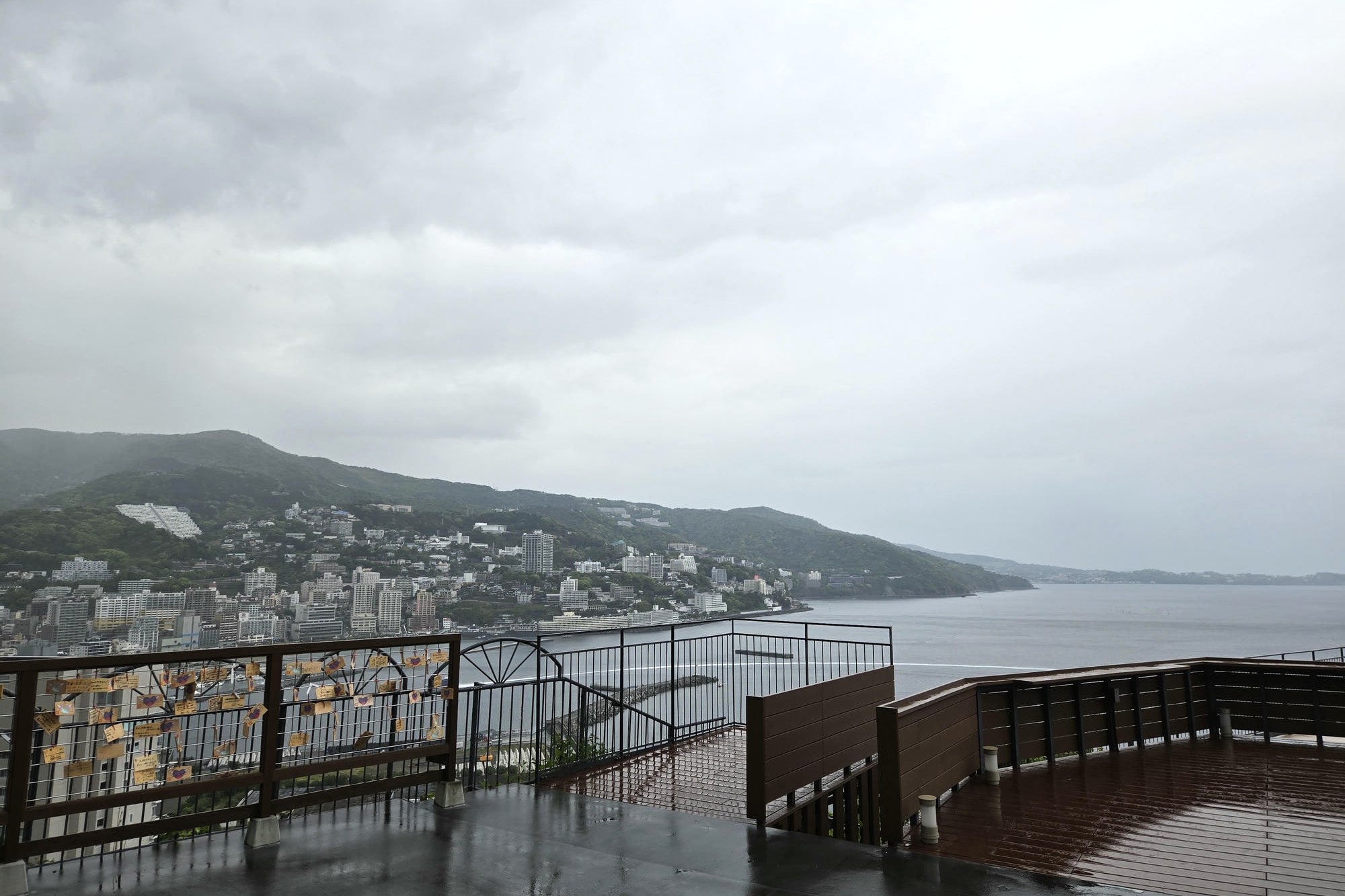
After ascending, you arrive at a large platform offering panoramic views of Atami City. There are also decorations here for praying or wishing for happiness in love.
There's also a small shop selling light meals and snacks, not very big. It was quite deserted that day.
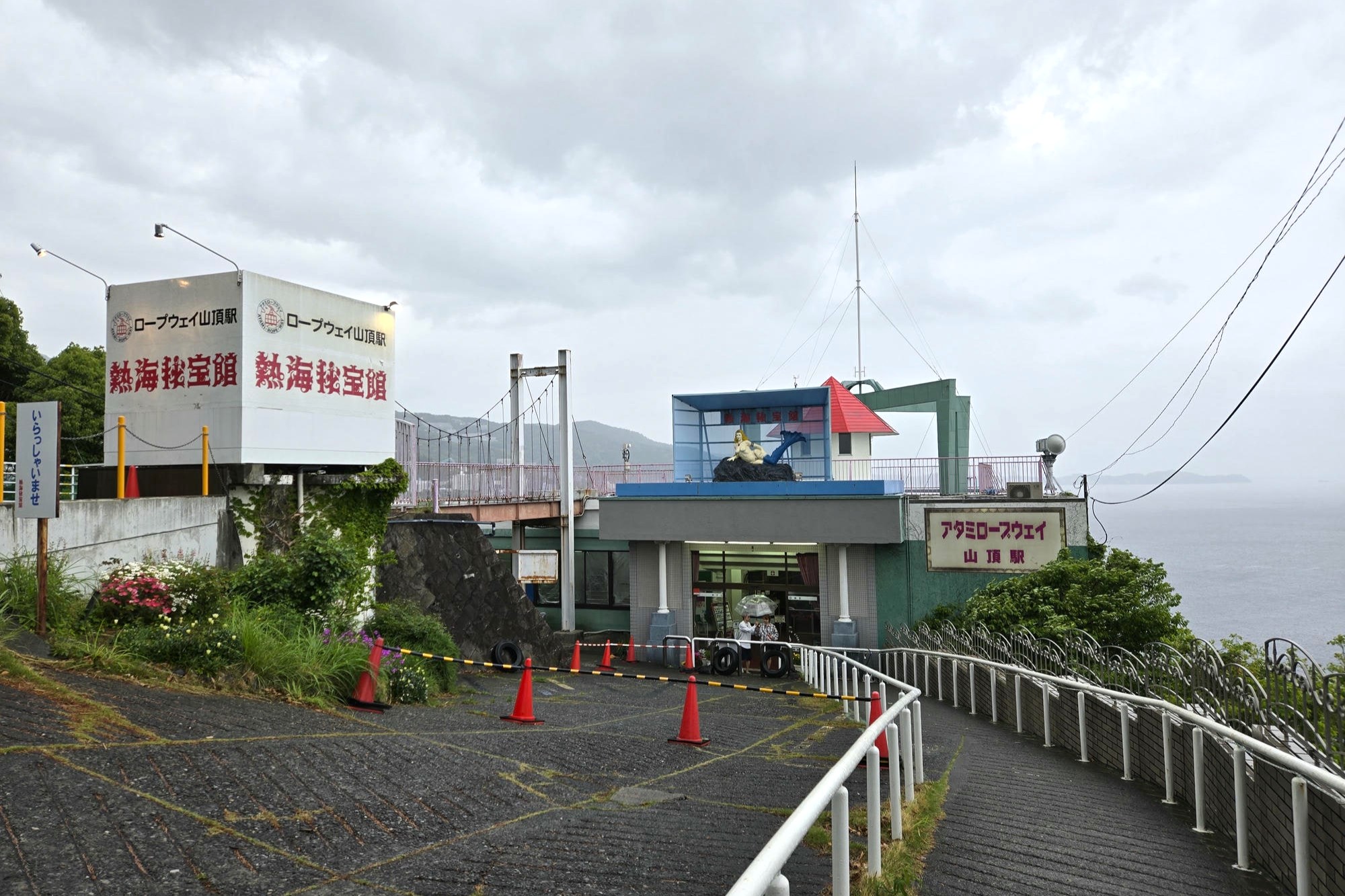
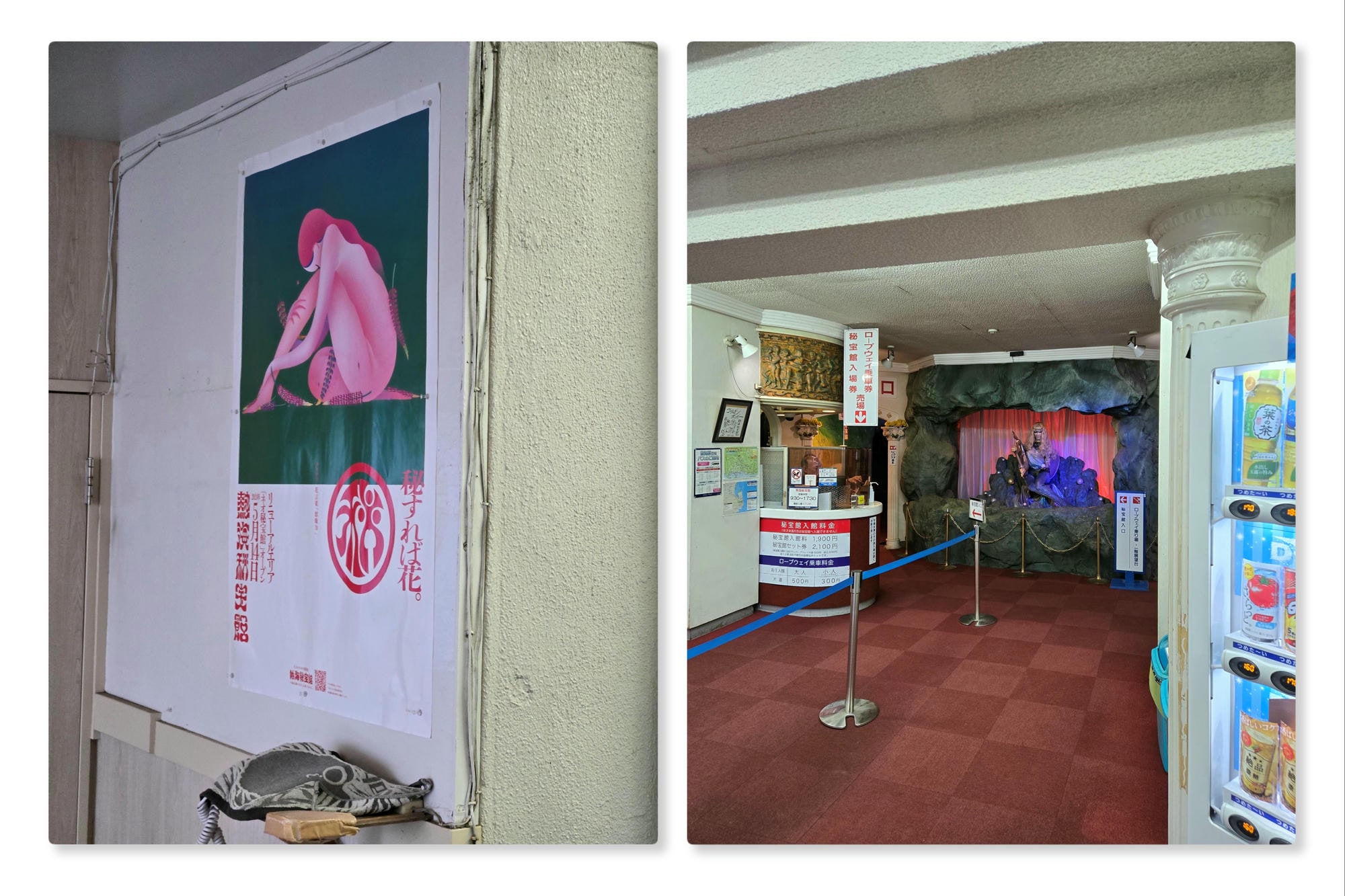
Continuing upwards, you reach the Atami Hihokan (Secret Treasure Museum) (the ropeway station is actually right below the museum). I had seen it introduced by an "old spicy girl" (blogger/influencer) before; it's quite a unique B-grade attraction. The overall architecture and decorations are indeed quite... peculiar.
Due to time constraints, I didn't go inside; I just took a few photos outside and then continued up towards the observation deck and Atami Castle.
Atami Castle
Continuing further up, I arrived at Atami Castle. Atami Castle, in contrast to the Hihokan and ropeway station, seems to have been renovated and redesigned. It's a modern-style castle, and overall, it looks quite grand.
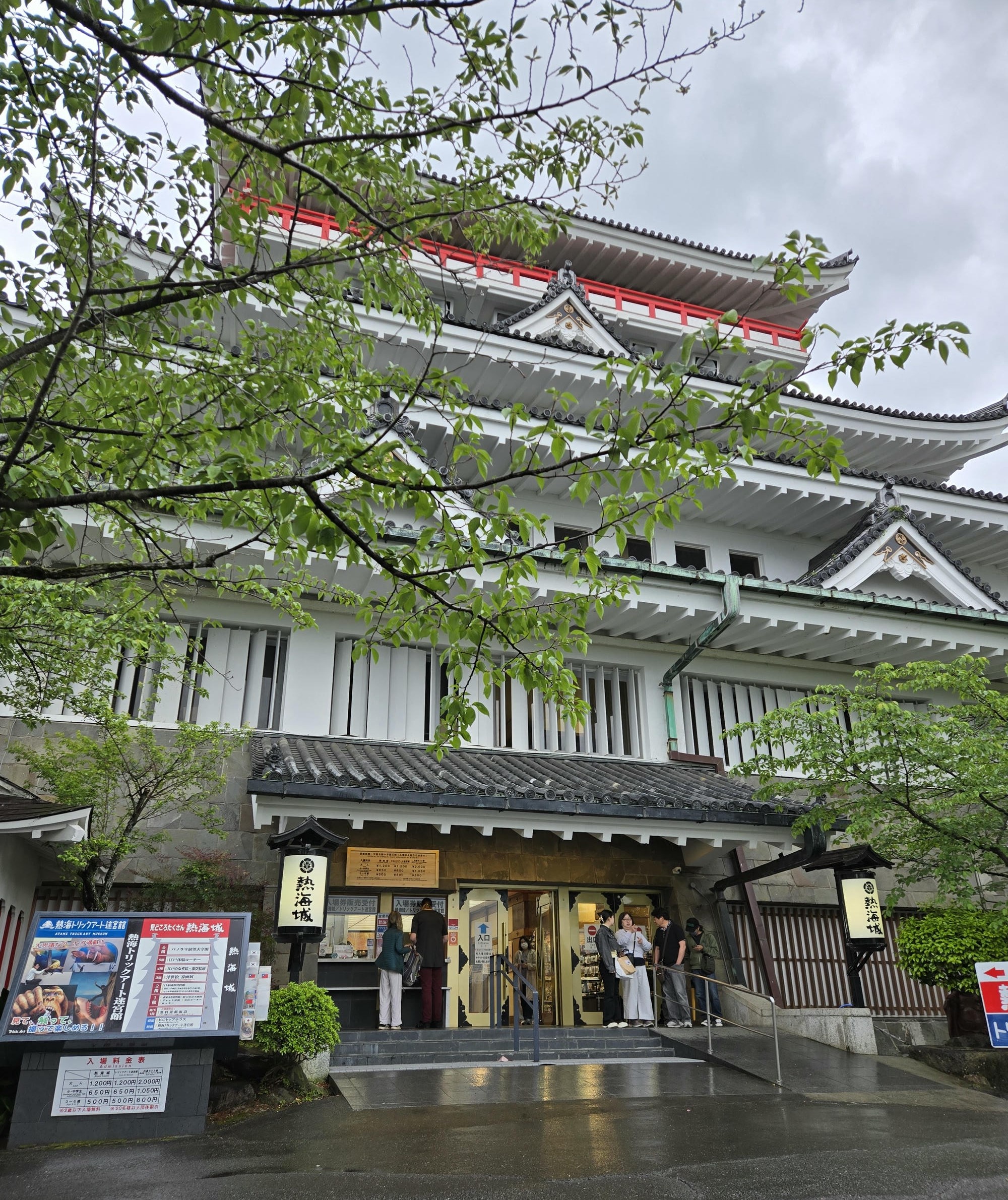
Atami Castle was also nearing closing time, so I didn't go inside.
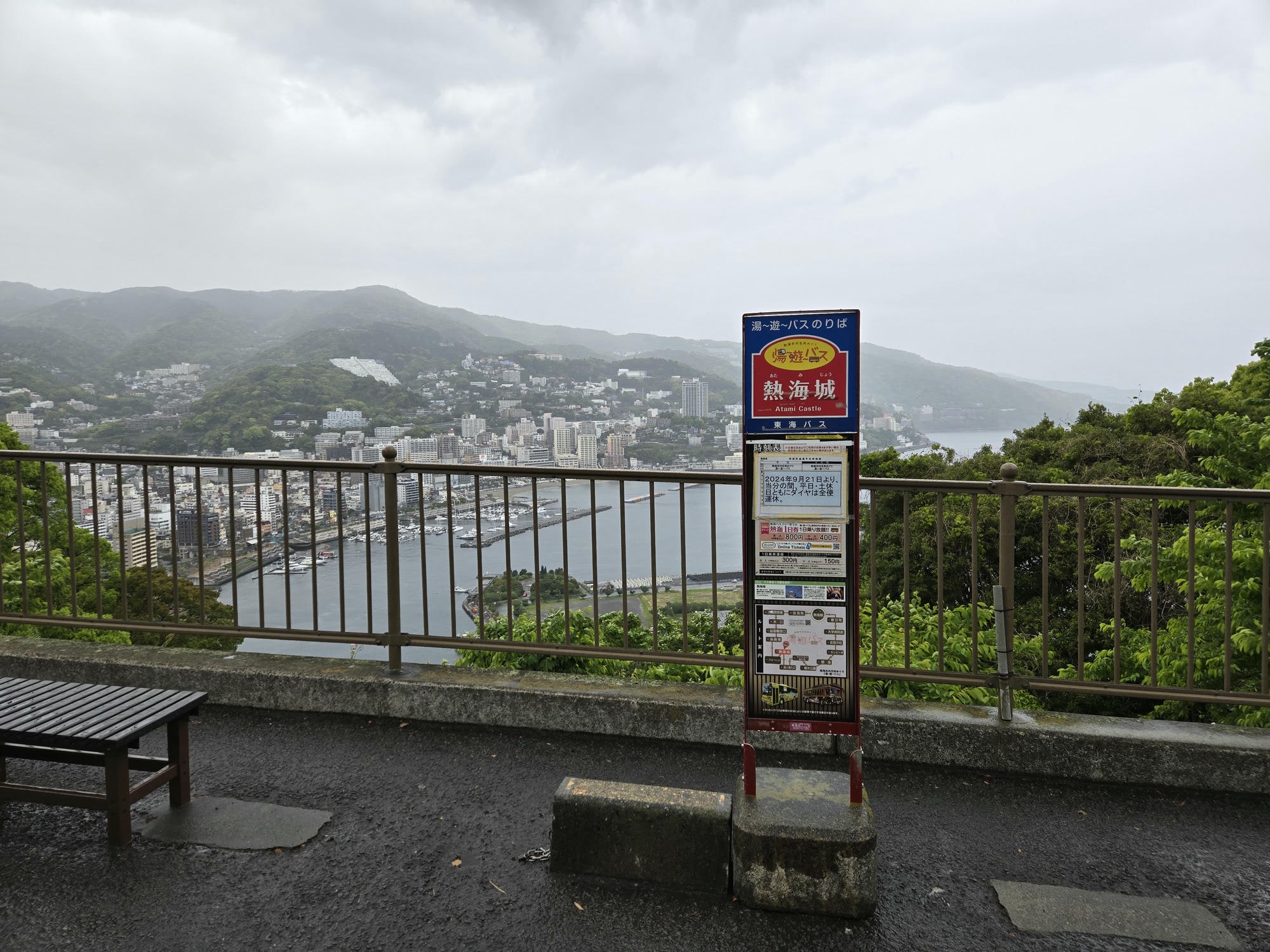
Actually, you can also drive up here instead of taking the ropeway. There's even a bus stop here... but it seems the bus service has been suspended since 2024?
The view of Atami City from up here is actually better than from the ropeway station. However, it was very windy and drizzling that day, almost blowing my umbrella away, so taking photos was a bit nerve-wracking.
You can clearly see how Atami has developed along the coast with its hotels. It would probably be great for swimming in good summer weather.
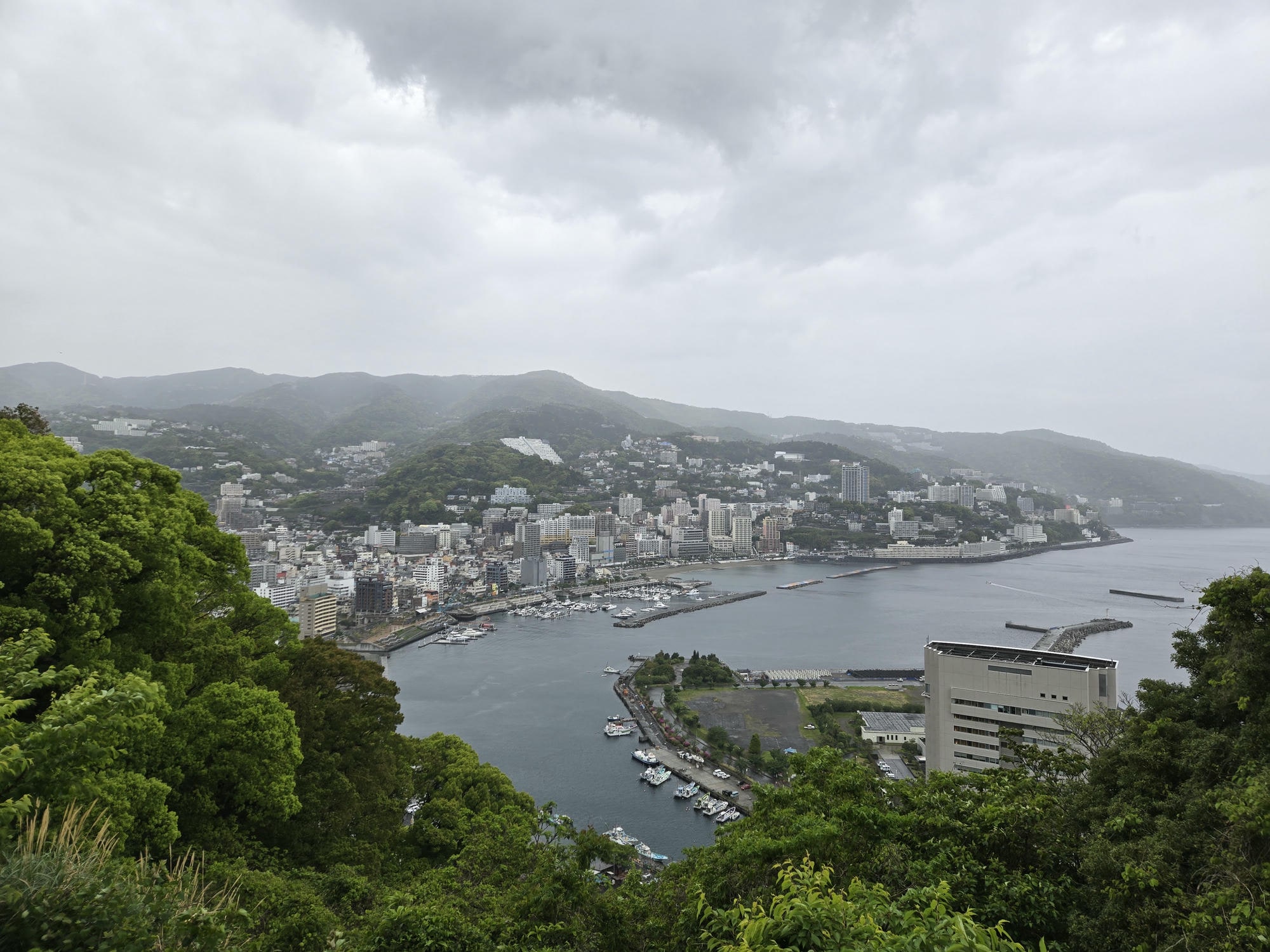
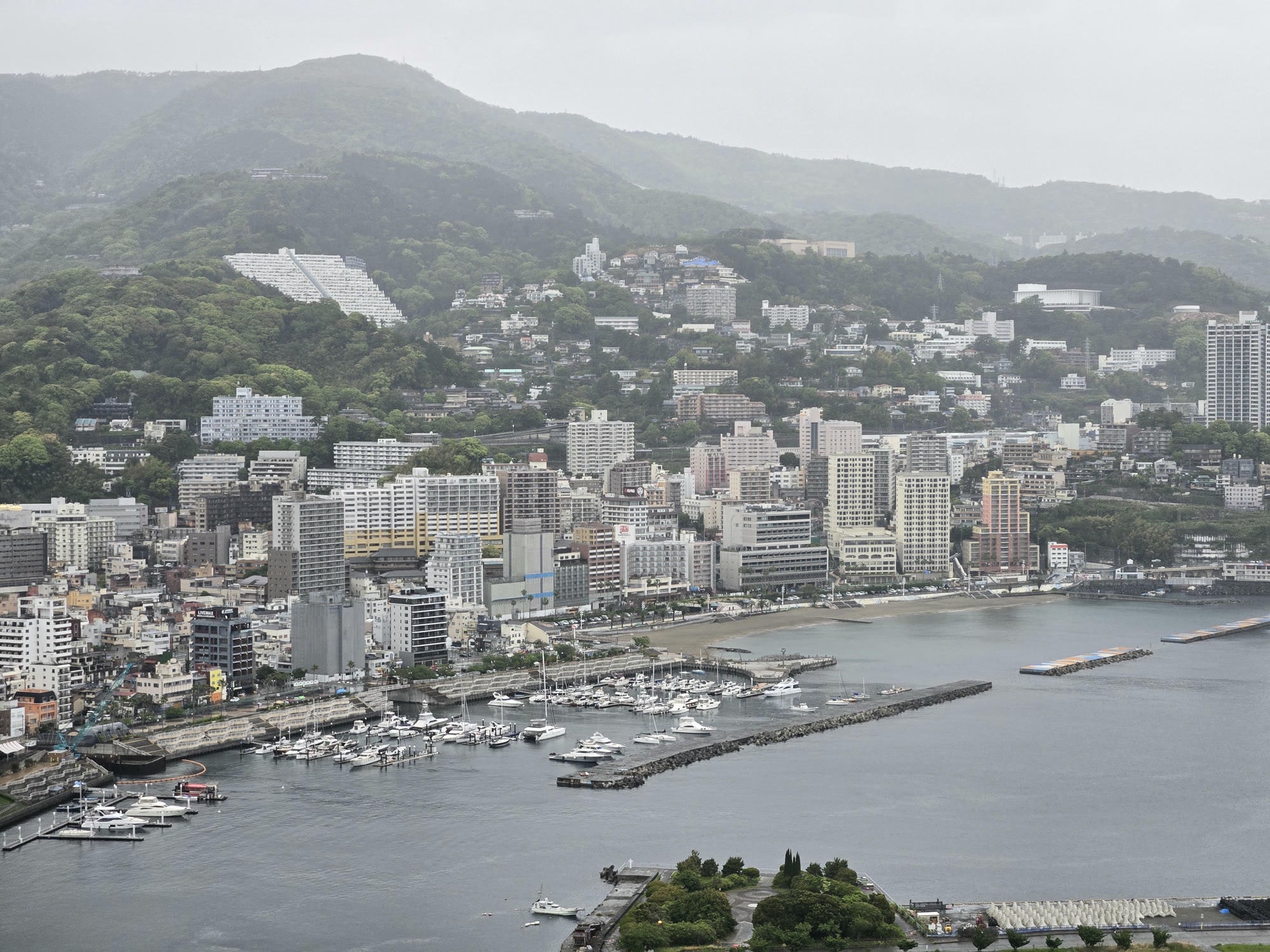
Behind Atami Castle, there are also some platforms directly facing the ocean, with shops and some tables and chairs for photo opportunities.
However, everything was closed that day, and the rain made the whole scene feel quite desolate.
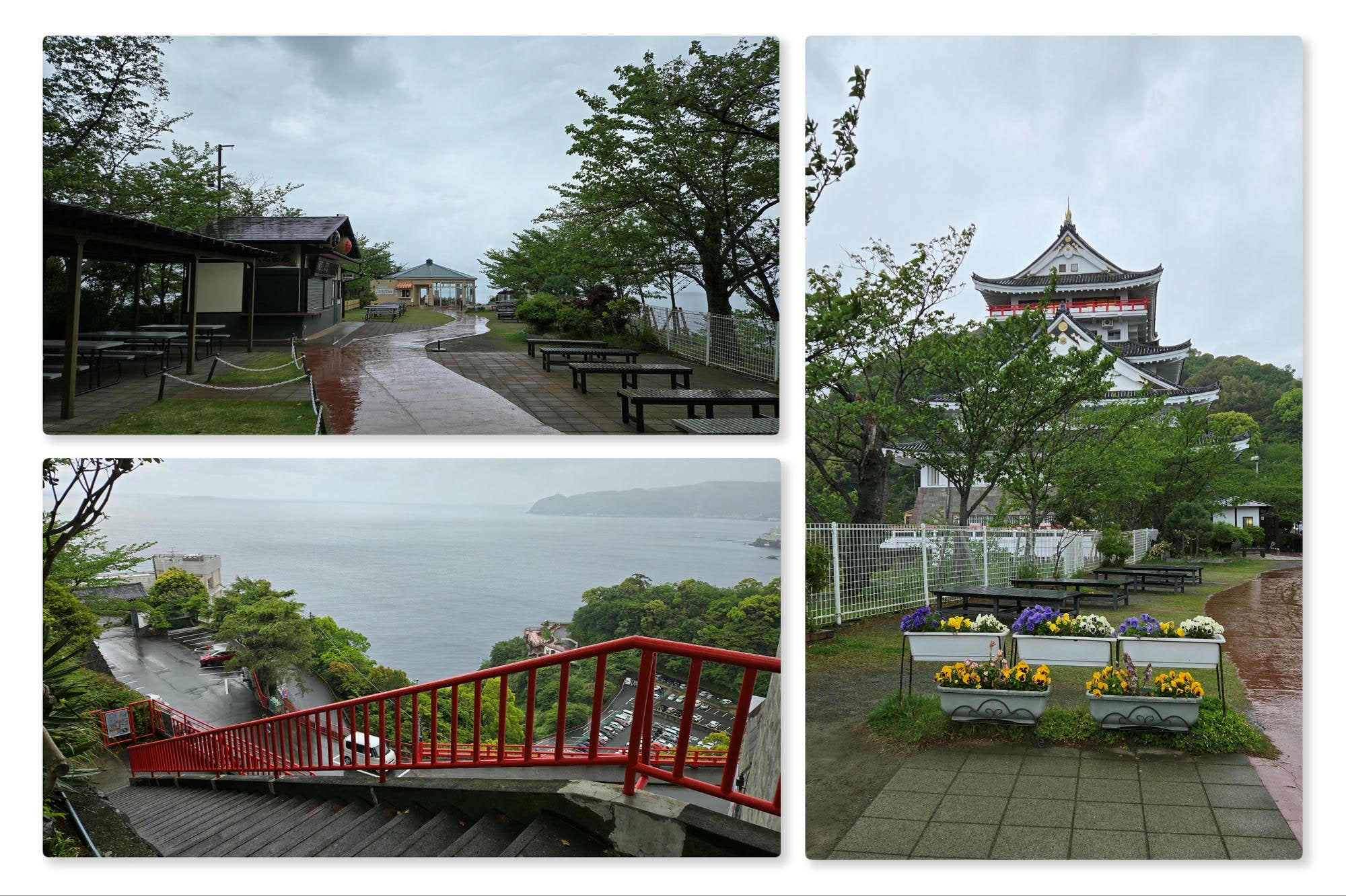
Due to time constraints, after taking some photos, I prepared for the return journey. On the way back, I was smarter and dutifully took the bus back to Atami Station.
Atami Fireworks Festival
Back at Atami Station, I waited for my friend at a nearby shopping center and bought some souvenirs.
It's worth noting that the shopping centers and streets here start closing around 7 PM, some even at 6 PM. They close quite early.
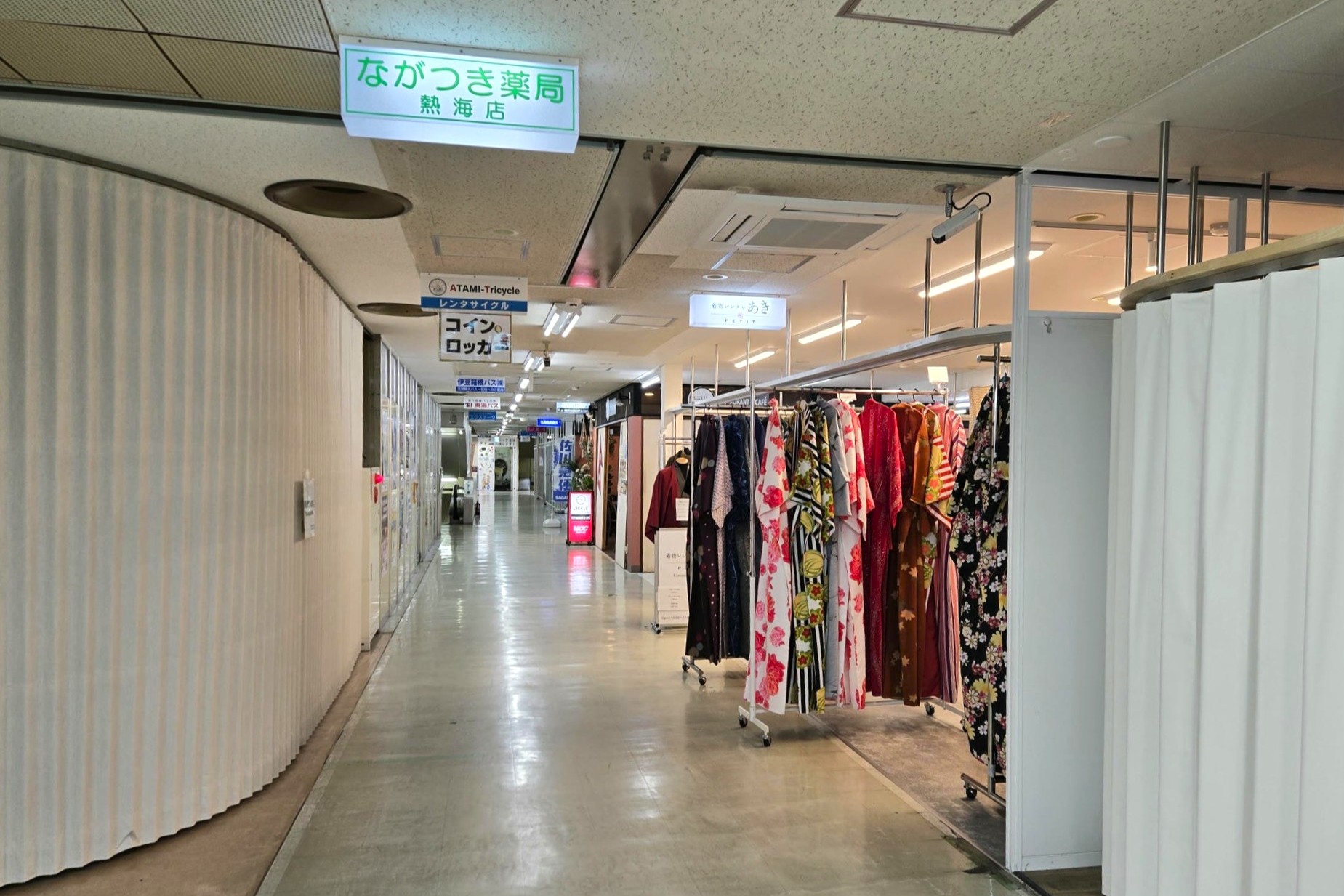
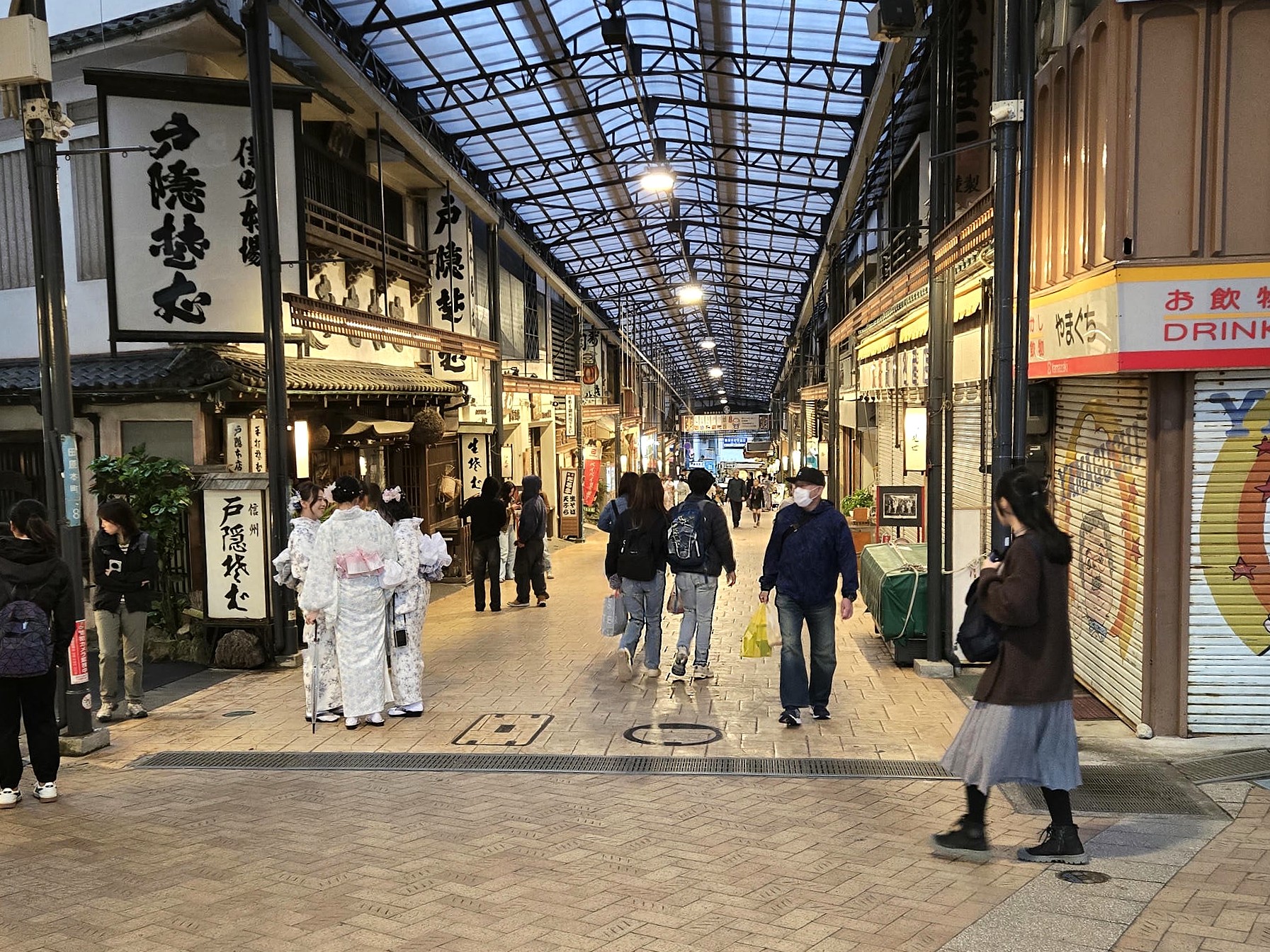
I had initially worried about not being able to buy an umbrella in Atami, so I bought a random one in Yokohama.
Turns out, they were everywhere here, better quality and cheaper too.
Also, my friend was initially concerned about luggage storage. It seems that because of the frequent fireworks festivals, the shopping centers here transform into luggage storage facilities after closing in the evening, and the prices are quite reasonable.
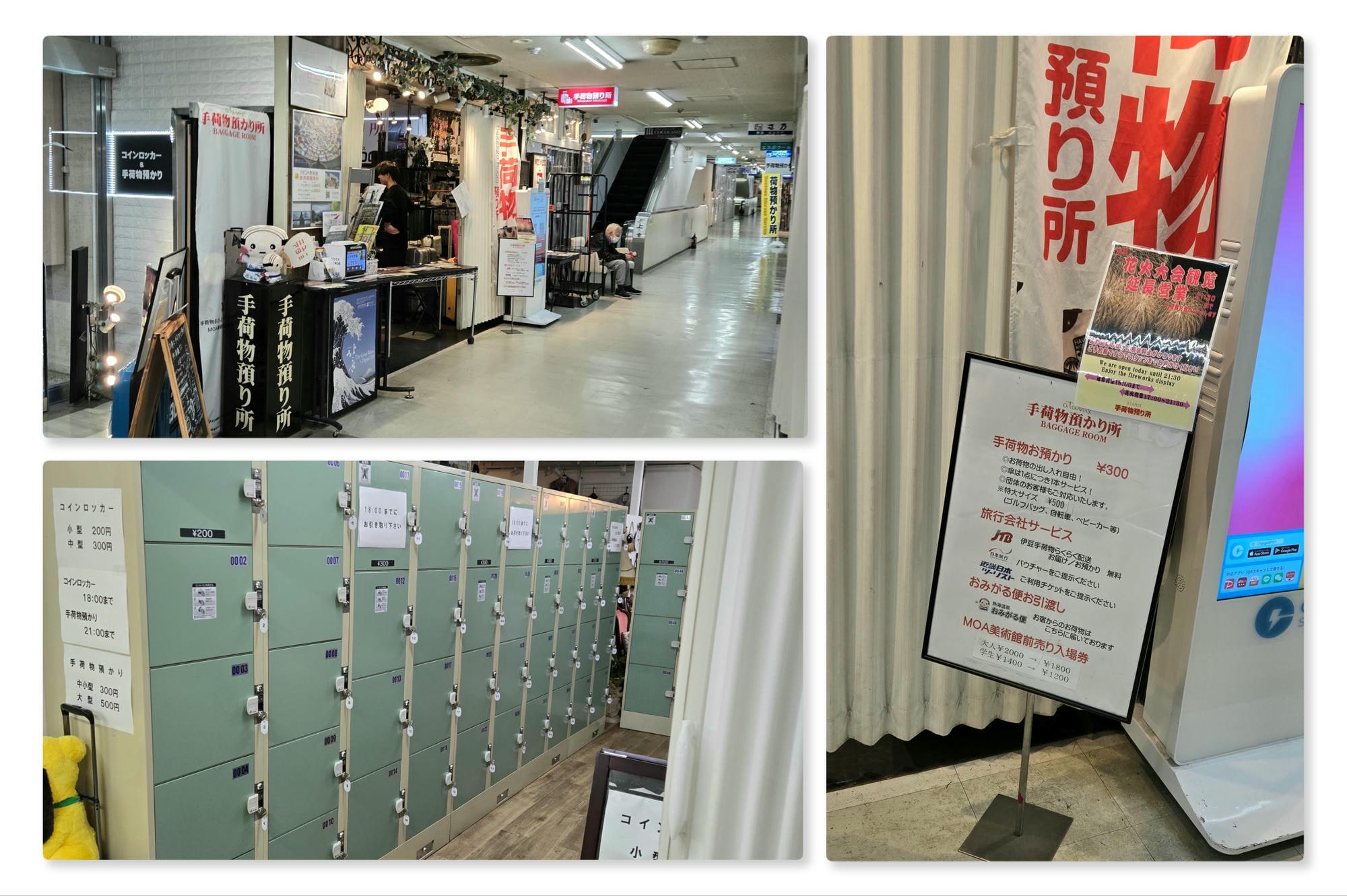
With the rain today, there weren't many people, making it quite relaxed.
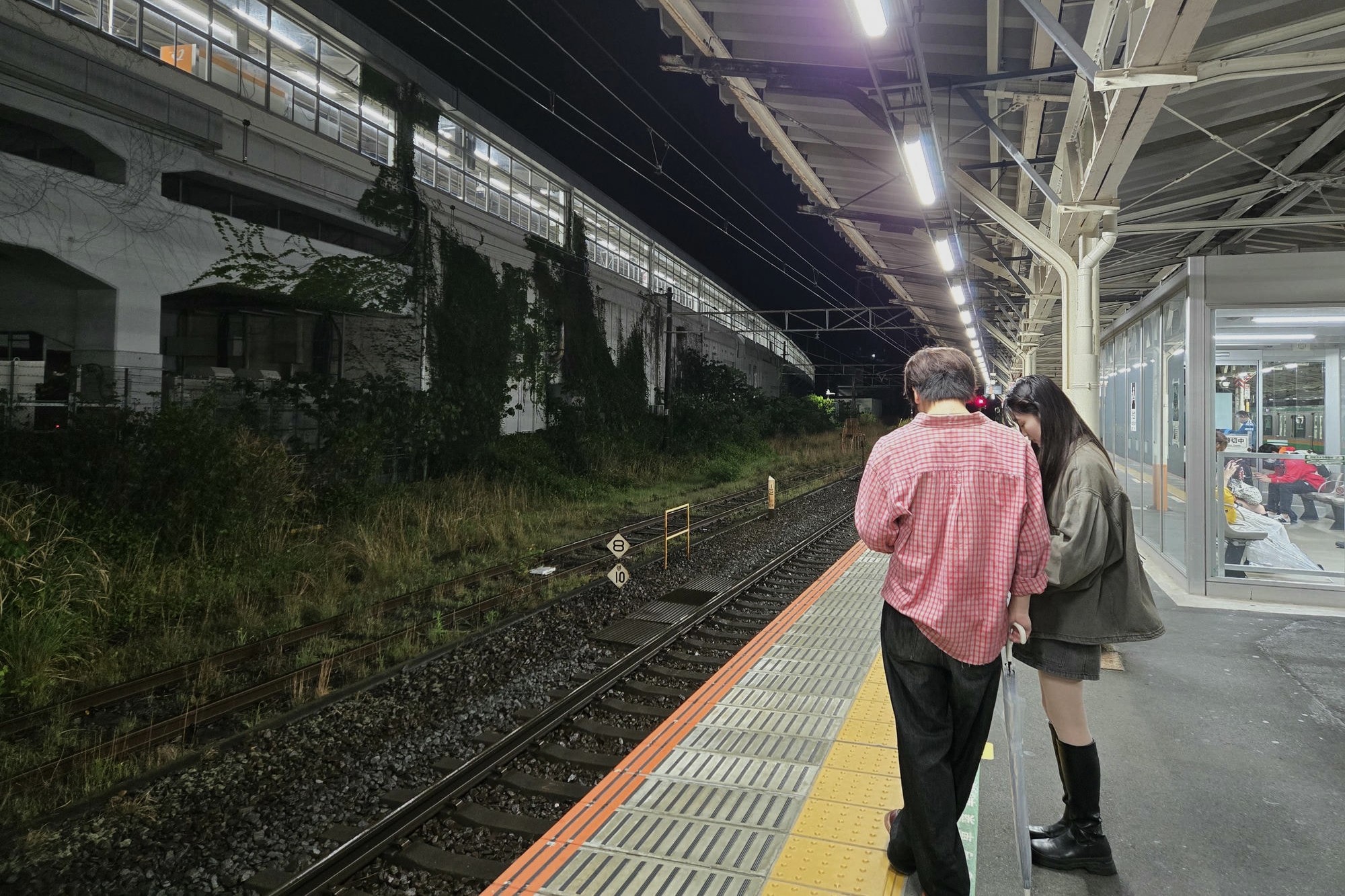
As the time approached, I followed the sparse crowd to the seaside to watch the fireworks.
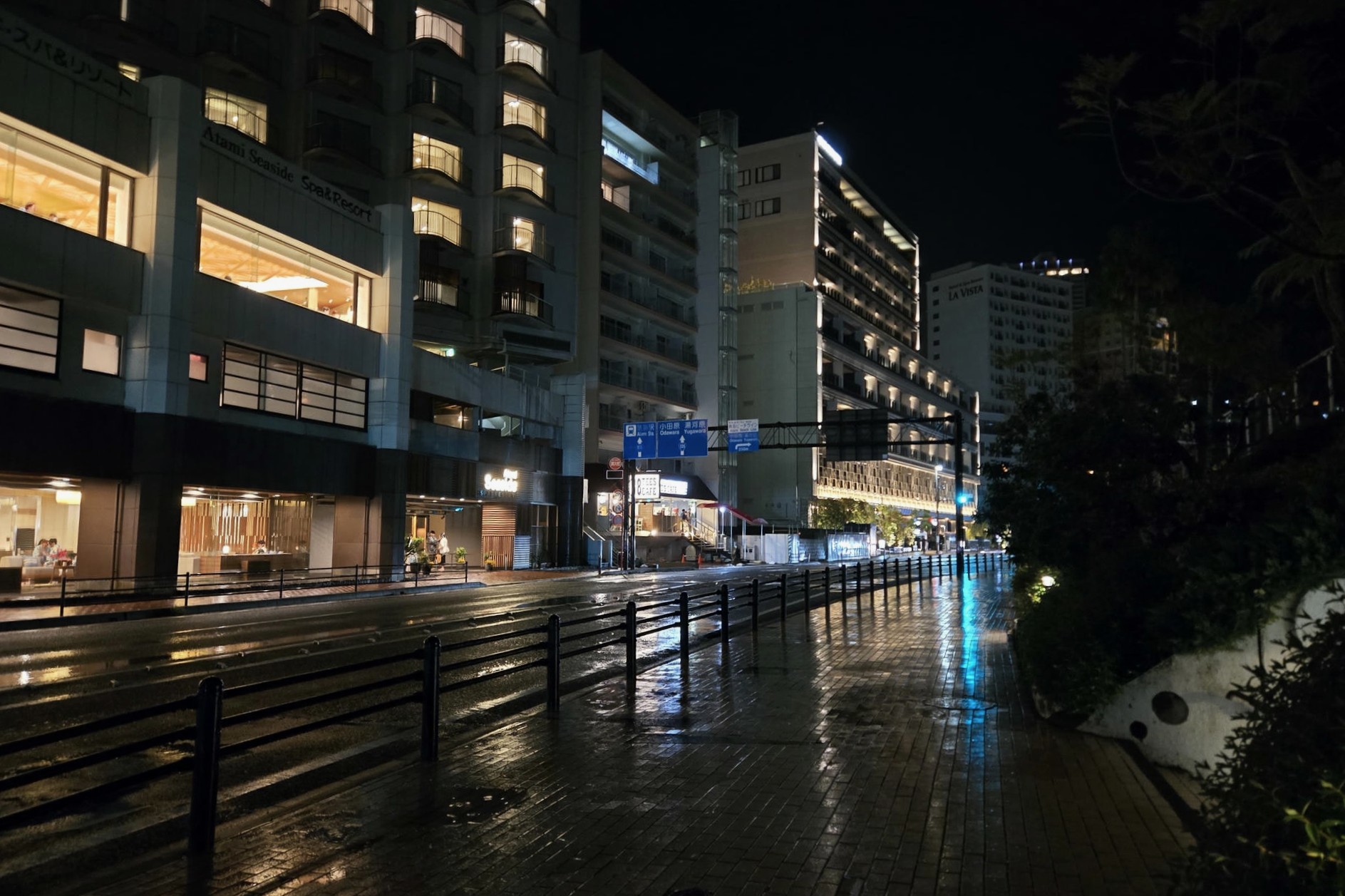
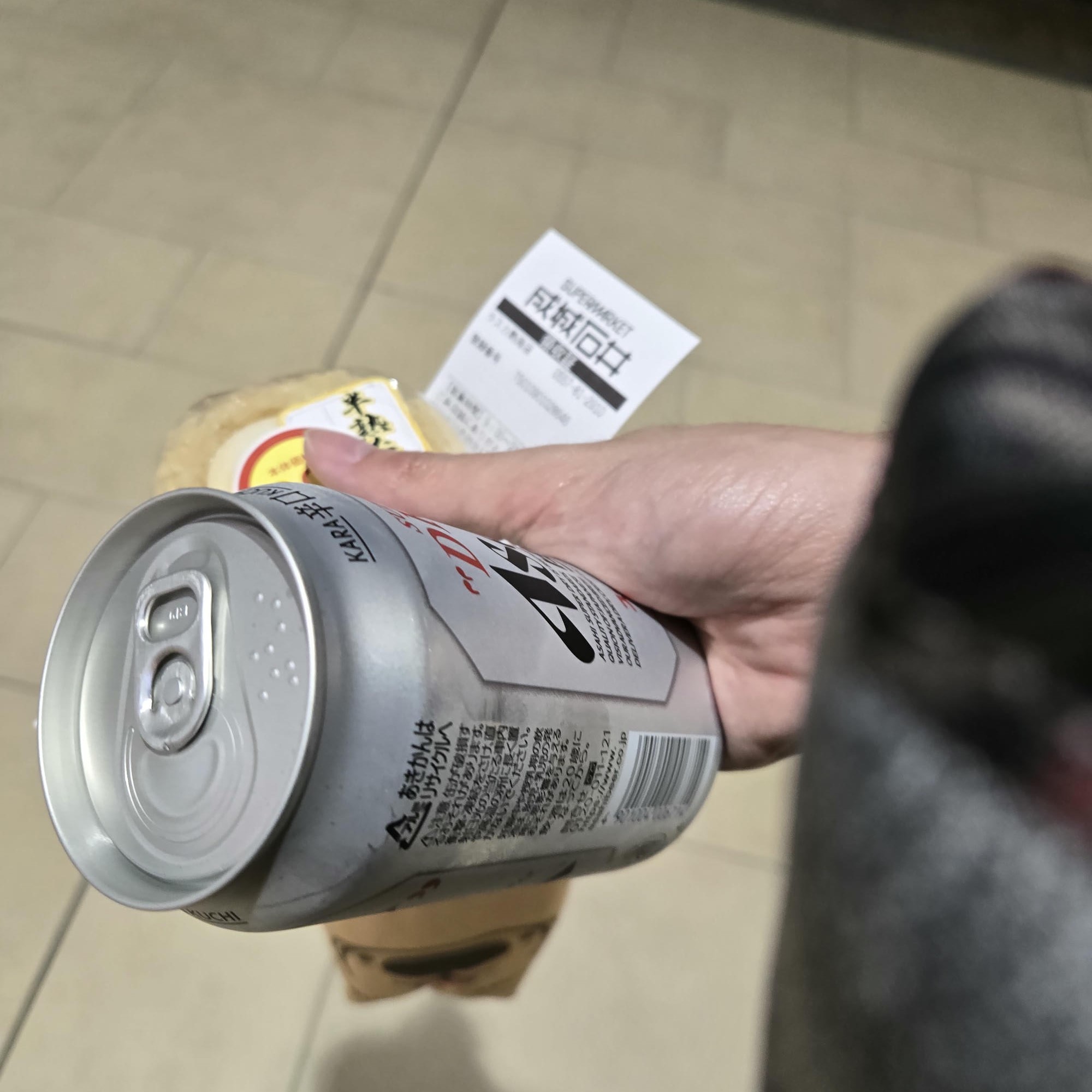
I had researched that the best spot was on the coastal beach, but with fewer people due to the rain that day, there was no need to arrive particularly early to secure a spot.
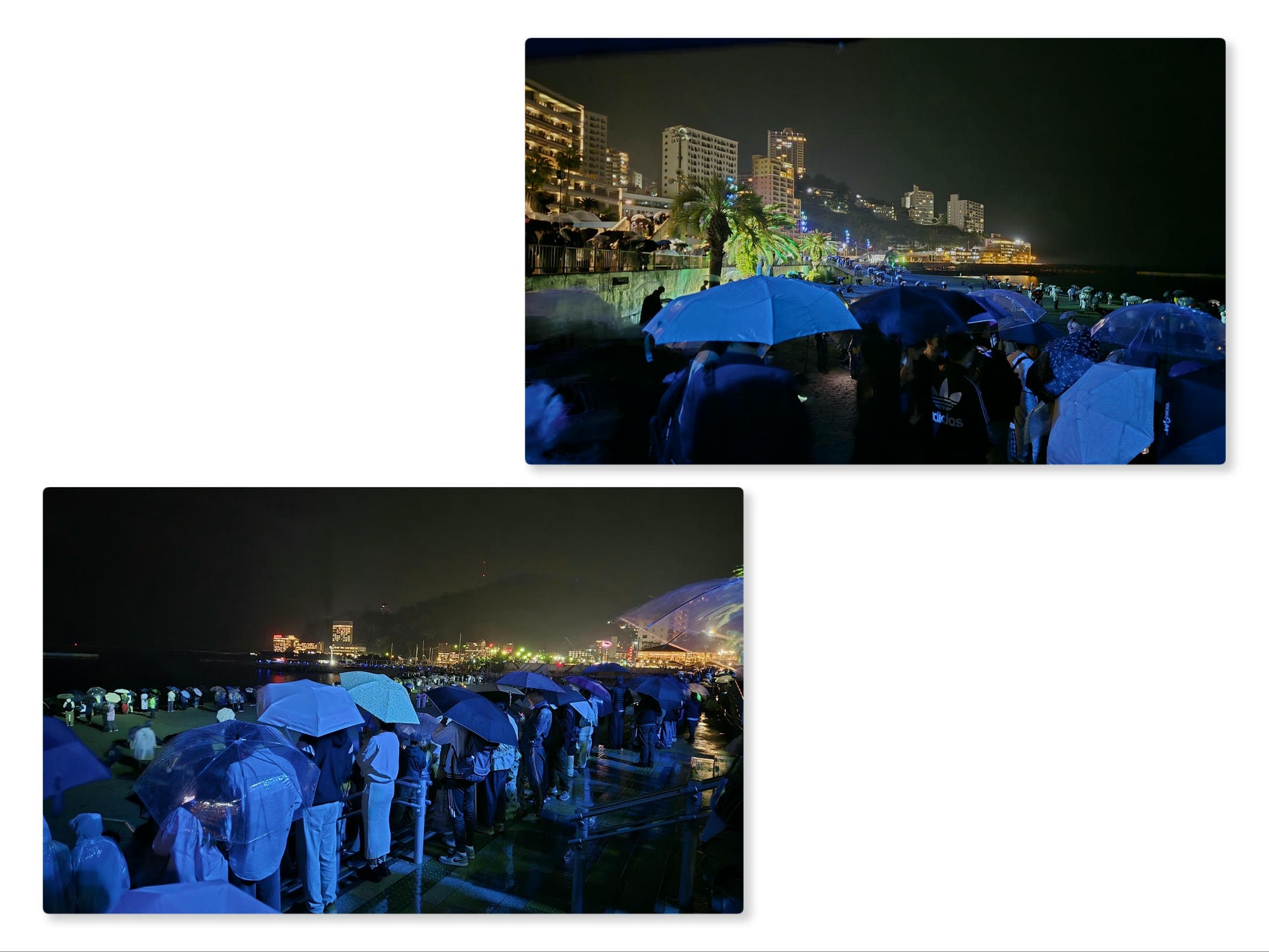
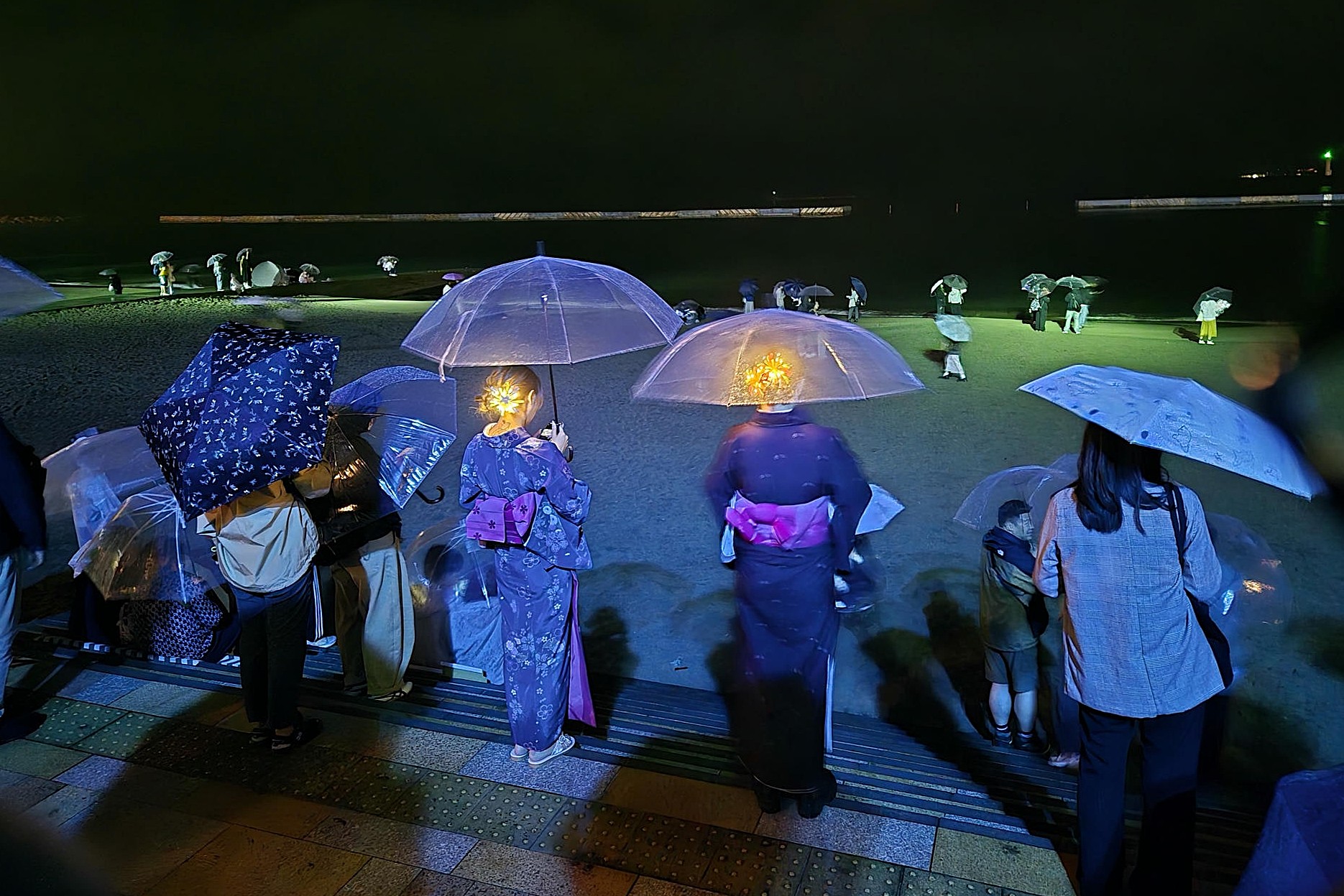
Atami Fireworks
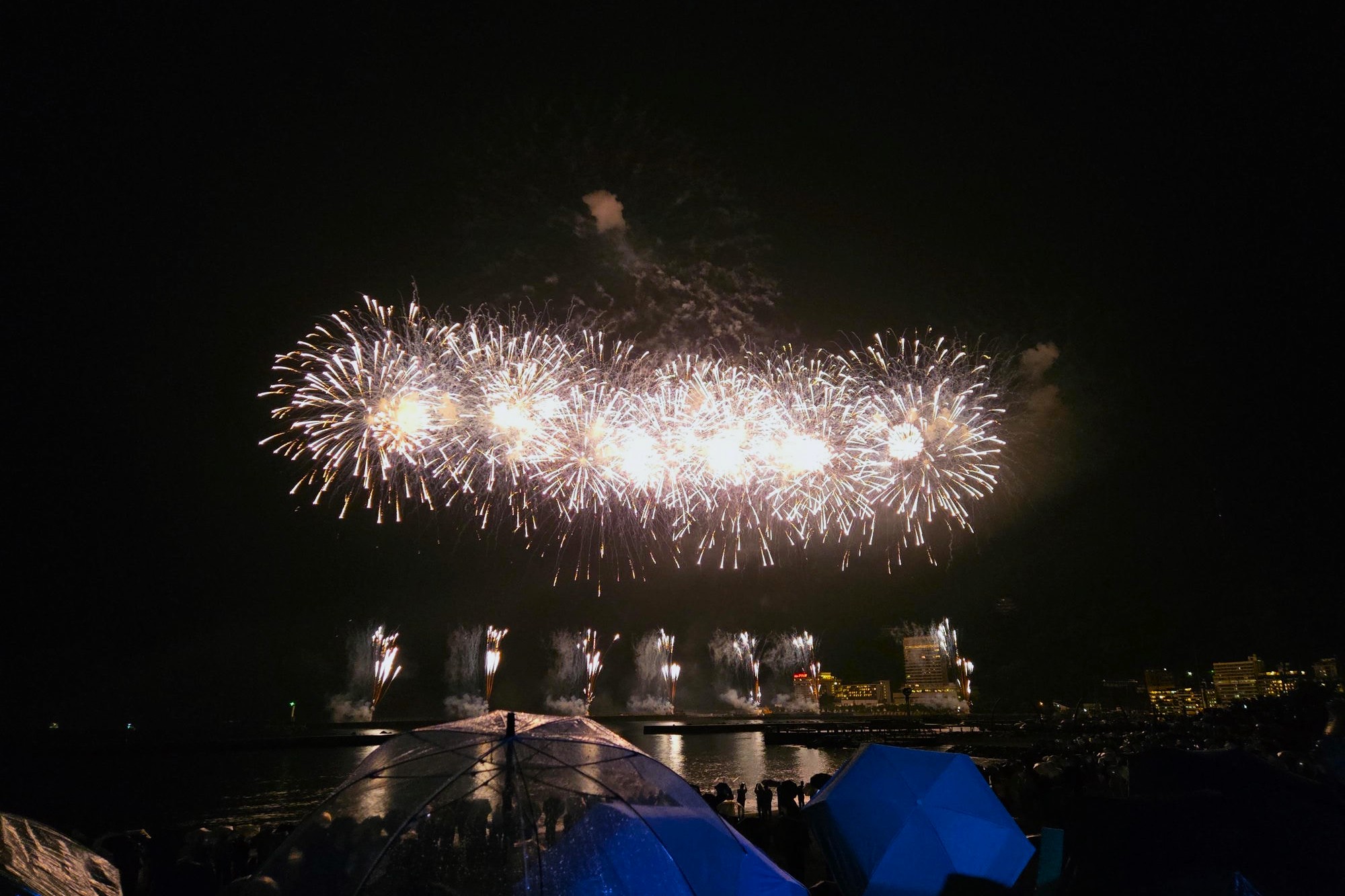
My thoughts? I can only say it was a bit of a pity and disappointment, but ultimately, I achieved my life goal of seeing a fireworks festival in Japan.
The display wasn't very long, and the rain made everyone a bit disheveled. Although it was still quite spectacular towards the end,
it lacked the accompanying music and even the food stalls I had always imagined. A bit of a shame, haha.
I'm not sure if Atami's fireworks are always like this; I remember hearing that their fireworks festival is quite famous.
Conclusion
This Atami trip unlocked a new, previously unvisited suburb and fulfilled a small part of my fireworks festival and Crayon Shin-chan memories.
Although the rain was a bit of a shame,
Atami's fireworks festival is particularly famous for its frequency. If you want to see a fireworks display and plan a short day trip,
I think it's quite accessible, and transportation isn't complicated. You can also get a glimpse of how Atami differs from downtown Tokyo.
That concludes this article. See you in the next one, if fate allows!